
Benefits of Same-Day Lab Transport for Healthcare Teams
How same-day specimen transport protects sample integrity, speeds diagnostics, and lowers retesting costs — and how Copergrine runs STAT, cold-chain, and cryogenic courier routes for Houston labs and clinics.
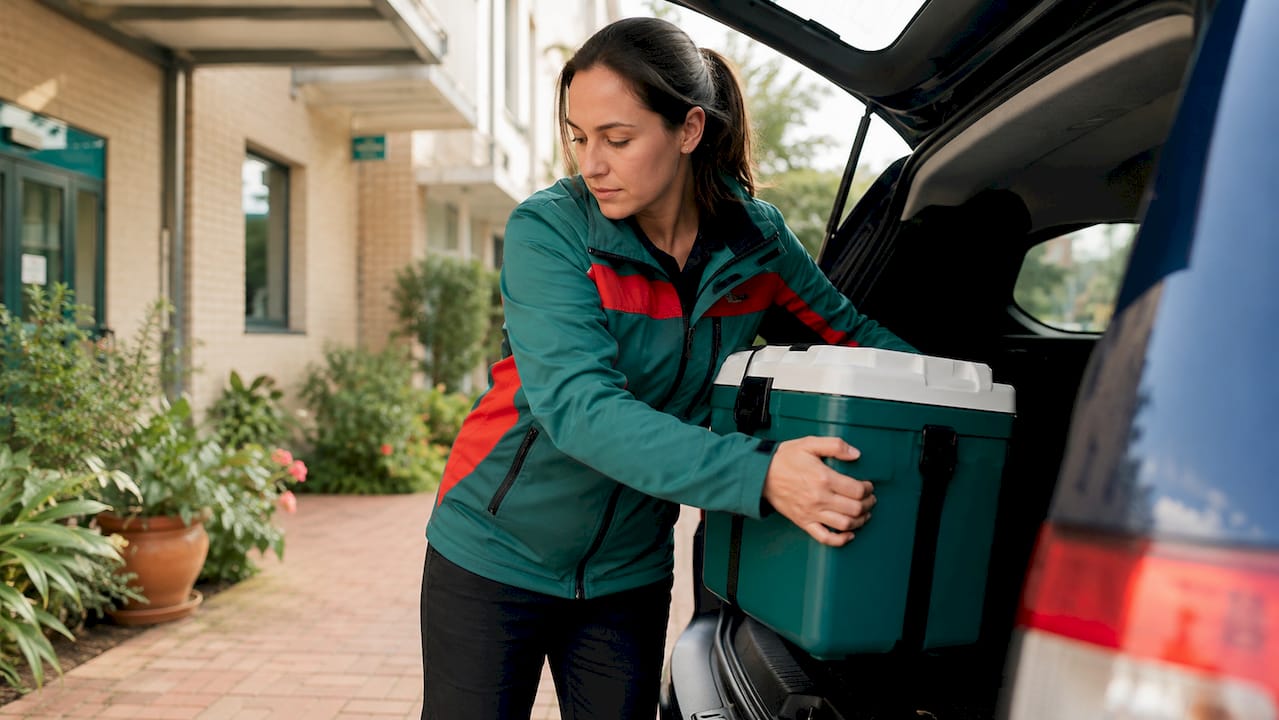
Benefits of Same-Day Lab Transport for Healthcare Teams
A result is only as good as the sample that survives the trip. Same-day lab transport — collecting specimens and delivering them to the laboratory within the same business day — is one of the most direct levers a clinic or lab has on diagnostic quality. For lab and clinic operations managers, the payoff goes well beyond speed: better sample integrity, faster clinical decisions, cleaner compliance records, and fewer costly repeat collections.
Copergrine Medical Courier runs STAT, cold-chain, and cryogenic specimen routes across the Greater Houston area, built around exactly these requirements. Here is what makes same-day handling matter — and what to look for when you set up a route.
1. Same-day transport protects sample integrity
Sample integrity is the single most important variable in pre-analytical quality, and it is decided before the specimen ever reaches the analyzer. The window between collection and the lab's receipt is when sensitive analytes degrade — and no downstream processing can fully correct it.
The College of American Pathologists and CLSI specimen-handling guidance both flag analytes that are sensitive to delay and temperature, including potassium, glucose, and lactate dehydrogenase (LDH). Glucose, for example, continues to be metabolized in whole blood after collection, which can produce falsely low readings when transport is slow and the sample is not kept cool (CLSI GP44 / H18; CDC laboratory specimen-handling guidance). Keeping transit short and temperature controlled is the most reliable way to preserve those values.
This is why dedicated cold-chain handling matters. Validated temperature-controlled packaging maintains specimen viability from pickup through lab receipt, reducing the rate of rejected or hemolyzed samples — and the repeat collections that follow.
Operations tip: When you set up a courier route, ask for documented pickup-to-receipt times. A courier that records that interval gives your lab a measurable pre-analytical quality indicator, not just a promise.
2. Faster transport accelerates diagnostic workflows
Direct, point-to-point routing is the operational core of same-day delivery. It removes the depot-consolidation steps common in general parcel networks, where specimens can sit for hours before onward movement. Cutting those intermediate stops shortens the time between collection and lab receipt.
Real-time tracking compounds the benefit. When clinic staff can see where a specimen is in transit, the receiving lab can stage reagents, assign technician time, and queue the sample before it arrives — shrinking total turnaround from collection to reported result.
The stakes are highest in acute and urgent care. A patient with chest pain needs results before a treatment pathway can be confirmed, and every hour of delay delays the decision. A clean same-day loop looks like this:
- Specimen collected at the clinic or point-of-care site.
- Courier dispatched with real-time tracking active.
- Lab receives advance notice and prepares to process.
- Result reported to the ordering provider within the same clinical window.
3. Same-day vs. next-day vs. parcel: a direct comparison
The case for rapid transport is clearest when you compare service models side by side on the criteria that actually move lab quality and cost.
| Criterion | Same-Day Medical Courier | Next-Day Service | General Parcel Network |
|---|---|---|---|
| Specimen transit time | Same business day | 12–24 hours | 24–72 hours |
| Temperature control | Validated cold-chain | Variable | Rarely guaranteed |
| Chain-of-custody documentation | Continuous, documented | Partial | Minimal |
| Real-time tracking | Standard | Limited | Rare |
| Retesting risk | Low | Moderate | High |
On-demand medical logistics providers are built around specimen-specific handling — chain-of-custody, temperature control, and direct routing — that general parcel networks are not designed to deliver. Same-day fees look higher per trip, but the total cost of ownership is often lower once reduced retesting and more efficient lab workflows are accounted for.
Operations tip: Before comparing courier quotes, build a quick retesting cost model. Multiply your average retest rate by cost per test, then add staff time for repeat collections. That number frequently exceeds the same-day premium.
4. Fewer rejected specimens, less lab backlog
Retesting is an underreported cost driver. When a specimen arrives degraded, hemolyzed, or out of temperature range, the lab must reject it — triggering a repeat collection, a second courier trip, and a reporting delay. Consistent, temperature-controlled same-day delivery reduces those rejections at the source.
Backlog relief follows. When specimens arrive on a predictable schedule, technicians process a steady queue instead of absorbing surges from batched or delayed deliveries. Predictable workflow reduces overtime, trims the error rate associated with rushed processing, and eases pressure on phlebotomy and lab staff.
5. Stronger chain-of-custody and compliance
Documented chain-of-custody is a regulatory expectation for many specimen types, including controlled-substance testing and clinical-trial samples. A dedicated medical courier provides documented chain-of-custody, scheduled routes, and temperature-controlled handling as standard.
That documentation works two ways. It supports accreditation and quality requirements tied to the College of American Pathologists (CAP) Laboratory Accreditation Program and CLIA, and it creates an auditable record if a result is ever disputed. Temperature logs through transit give your QA team the data to confirm specimen validity — or flag a possible excursion before a result is reported.
6. Reliability builds provider and patient confidence
Reliable specimen handling earns trust at both the provider and patient level. When a referring physician knows specimens from your clinic arrive intact and on time, that reliability factors into where they send work. And a patient who gets results the same day as their draw experiences care as organized and attentive — which shows up in retention, reviews, and referrals.
In markets where multiple providers offer similar clinical services, logistics quality becomes a real differentiator. Practices that treat compliance-ready specimen logistics as a clinical standard rather than an afterthought tend to stand apart.
7. Best practices for setting up a same-day route
Effective integration comes down to four operational areas:
Choose a true medical courier. Pick a provider with documented experience in specimen transport — not a general courier that handles medical samples as a sideline. Verify temperature-validation records, chain-of-custody procedures, and STAT response capability.
Coordinate scheduling and routes. Establish fixed pickup windows aligned to your lab's processing schedule so specimens don't sit past their stability window. Confirm the receiving lab's intake hours and queues.
Standardize packaging and handover. Train clinical staff on correct tube selection, labeling, and temperature packaging for each specimen type. An on-time delivery is only as good as the collection and packaging that preceded it.
Require real-time tracking. Make tracking non-negotiable. It supports QA reviews, surfaces recurring delays, and gives your team the visibility to intervene before a specimen is compromised.
Key takeaways
Same-day lab transport protects specimen integrity, speeds diagnostic decisions, and lowers total operating cost through fewer rejected samples and more predictable lab workflows.
| Point | Detail |
|---|---|
| Integrity is time-sensitive | Pre-analytical delays degrade analytes like glucose and LDH before the lab can act (CLSI GP44/H18; CDC). |
| Direct routing shortens turnaround | Point-to-point transport removes depot delays and enables same-day reporting. |
| Total cost is lower than it looks | Reduced retesting and steadier workflows offset a higher per-trip fee. |
| Compliance needs documentation | Chain-of-custody and temperature logs support CAP and CLIA requirements. |
| Reliability is a differentiator | Consistent handling improves provider referrals and patient retention. |
How Copergrine handles your specimen transport
Copergrine Medical Courier operates STAT and same-day specimen routes across the Greater Houston area, built for the timing and compliance requirements of clinical and laboratory workflows. Every run includes documented chain-of-custody with photo and signature proof of delivery, temperature-controlled cold-chain handling, cryogenic (LN2) transport for samples that require it, and real-time GPS tracking with ETAs — all HIPAA-compliant under a signed BAA.
For time-critical work, dedicated STAT and priority dispatch get specimens moving fast; for ongoing volume, scheduled lab routes keep pickups predictable and aligned to your processing windows.
Request a pickup when you need a specimen moved today, or set up a recurring lab route tailored to your collection volume and lab partnerships.
FAQ
What does a same-day lab courier do?
A same-day lab courier is a specialized medical transport service that collects specimens from a clinic or collection site and delivers them to the laboratory within the same business day. The goal is to preserve analyte stability and enable faster diagnostic reporting than next-day or parcel-based alternatives.
How does faster transport affect test results?
Shorter transit reduces the pre-analytical window — the delay between collection and lab receipt — during which sensitive analytes like glucose and LDH can degrade. Keeping that window short and temperature-controlled supports more accurate results and fewer rejected or retested specimens (CLSI GP44/H18; CDC).
Is same-day transport more expensive than standard courier service?
The per-trip cost is typically higher, but total cost of ownership is often lower once you account for reduced retesting, fewer repeat collections, and steadier lab workflows.
What compliance requirements does same-day transport support?
A dedicated medical courier provides documented chain-of-custody and temperature logs that support accreditation and quality requirements associated with the College of American Pathologists (CAP) and CLIA.
Does Copergrine serve my area?
Copergrine Medical Courier serves the Greater Houston area. Contact us with your pickup and lab locations to confirm coverage and set up a route.