
How to Package Biohazard Specimens for Transport
A practical guide to packaging biohazard specimens for transport — triple packaging, UN3373 vs. Category A, labeling, and the courier partner that keeps Houston shipments compliant.
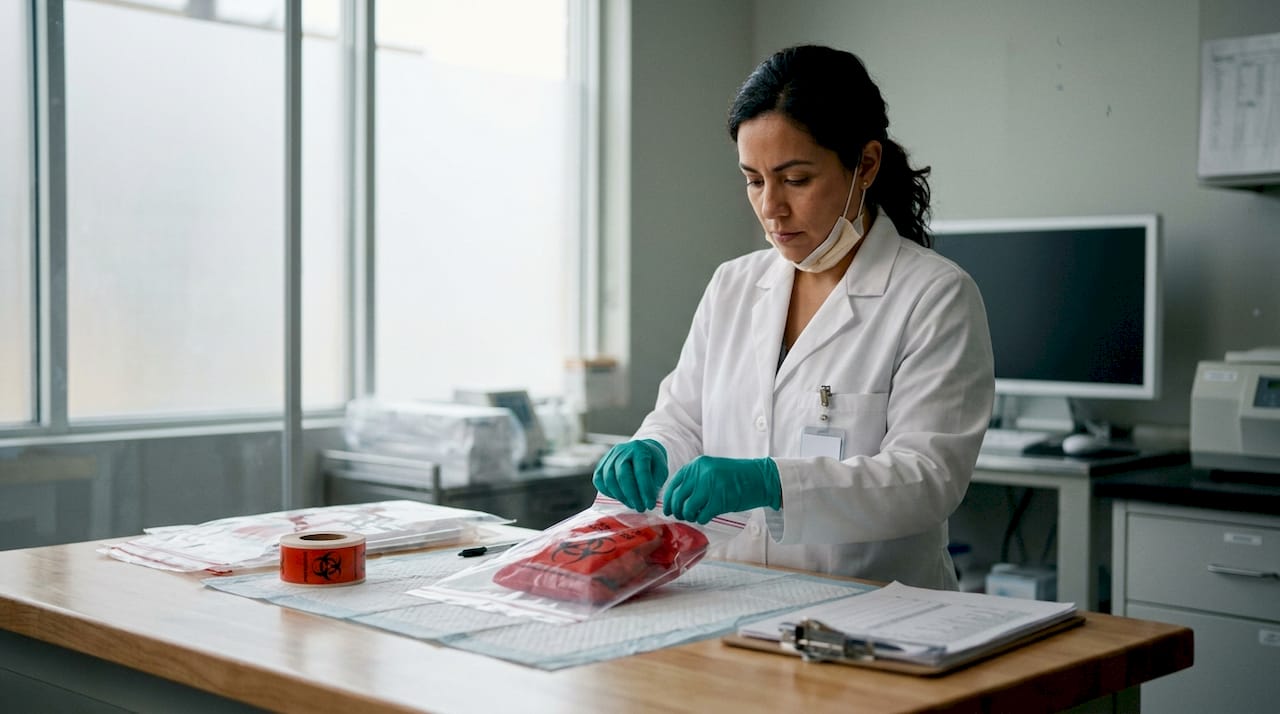
How to Package Biohazard Specimens for Transport
A result is only as good as the sample that survives the trip. For clinics, labs, and hospitals in the Greater Houston area, getting a biohazard specimen from the collection point to the receiving lab intact and compliant is not a clerical detail — it is the difference between a billable result and a rejected, re-drawn, delayed one. Copergrine Medical Courier moves specimens across Houston on the same triple-packaging and chain-of-custody discipline this guide describes, so you can hand off the regulatory burden along with the sample. Here is how compliant packaging actually works, and where the most common failures hide.
The regulatory frameworks that govern specimen transport
Shipping infectious and biological substances is governed by a small set of well-established, overlapping rules. Knowing which one applies to your sample drives every packaging decision.
- OSHA Bloodborne Pathogens Standard (29 CFR 1910.1030) — governs how specimens containing blood or other potentially infectious materials are contained, labeled with the biohazard symbol, and handled to protect workers.
- DOT / PHMSA Hazardous Materials Regulations (49 CFR Parts 171–180) — govern ground transport of infectious substances within the United States, including UN3373 marking.
- IATA Dangerous Goods Regulations — govern air transport, including Packing Instruction 650 (Category B) and Packing Instruction 620 (Category A).
- CDC and the U.S. Postal Service / 42 CFR Part 72 — provide additional guidance on transporting etiologic agents and diagnostic specimens.
These frameworks all converge on the same physical answer: a three-layer containment system, correctly labeled, with documentation kept separate from the specimen.
What materials are required to package biohazard specimens?
Every compliant shipment depends on three distinct packaging layers, each with a specific job. The wrong container at any layer creates a failure point that no amount of correct labeling can fix.
Primary container
The primary container holds the specimen directly. It must be sealed, leakproof, and labeled with patient identification. Glass tubes with screw caps, sealed plastic vials, and cryogenic tubes with O-ring seals are the standard choices. For liquids, the seal must hold under the pressure fluctuations common in air freight.
Secondary container
The secondary container encloses the primary and provides the critical backup layer if the primary fails. Under IATA Packing Instruction 650, secondary packaging for liquid Category B specimens must withstand an internal pressure differential of 95 kPa. Absorbent material sufficient to soak up the entire contents of the primary container goes between the primary and secondary layers, and the biohazard symbol must be visible per OSHA 29 CFR 1910.1030.
Outer packaging
The rigid outer container protects the secondary container from physical damage. Under IATA PI 650, the completed package must pass a 1.2-meter drop test and display the UN3373 diamond marking for Category B substances. Corrugated fiberboard, rigid plastic, and metal canisters all qualify when they carry the required certification.
| Packaging Layer | Material Requirements | Key Function |
|---|---|---|
| Primary container | Sealed, leakproof, patient-labeled | Direct specimen containment |
| Secondary container | Biohazard-labeled, 95 kPa capable, absorbent inside | Backup containment if primary fails |
| Outer container | Rigid, drop-test certified, UN3373 marked | Physical protection during transit |
| Absorbent material | Enough to absorb the full primary contents | Spill control within the secondary layer |
| Documentation | Sealed separately, never inside the biohazard bag | Chain of custody and compliance records |
How do you package biohazard specimens step by step?
The sequence matters as much as the materials. Performing steps out of order — even with compliant containers — produces a non-conforming shipment.
- Seal and label the primary container. Confirm the specimen is fully enclosed, the cap is tight, and the patient ID label is on the container itself, not on a lid that could separate.
- Wrap the primary container in absorbent material. Gauze, absorbent pads, or cellulose wadding should surround it completely and absorb the full liquid volume if it breaks.
- Place the wrapped primary into the secondary biohazard bag. Seal the closure completely and confirm the biohazard symbol is visible. For liquids, verify the bag meets the 95 kPa requirement.
- Prepare documentation separately. Place requisition forms, chain-of-custody documents, and test orders into a clean sleeve. Do not let it contact the specimen or the biohazard bag.
- Place the secondary container and the documentation sleeve into the rigid outer container. The sleeve goes between the secondary container and the outer wall — never inside the biohazard bag.
- Close and mark the outer container. Affix the UN3373 diamond label for Category B. Include shipper and receiver names and addresses and any temperature or handling indicators. Category A substances ship under UN2814 or UN2900 with additional markings.
- Complete the shipping documentation. Carrier-specific forms and, for air shipments, any required dangerous-goods paperwork must be accurate before handoff.
Pro tip: Before sealing the outer container, do a 30-second visual check of every layer — primary sealed, absorbent in place, secondary closed, documentation in its sleeve. That single check prevents most rejected shipments.
Category A vs. Category B: classification drives everything
The classification of your specimen determines the entire packaging and documentation set.
- Category A infectious substances are those capable of causing permanent disability or life-threatening disease in otherwise healthy people or animals. They ship under UN2814 (affecting humans) or UN2900 (animals only) and require IATA Packing Instruction 620 — more stringent than Category B.
- Category B substances, which include most routine clinical and diagnostic specimens, ship under UN3373 and follow Packing Instruction 650.
When in doubt about classification, treat it as the higher category and confirm with your receiving lab or a qualified dangerous-goods specialist before shipping.
The failures that cause most rejections
Operational failures cluster around a handful of recurring problems. Catching them in advance beats troubleshooting after a rejection.
- Paperwork contamination is the single most common failure. Documentation that rides loose inside the biohazard bag gets contaminated and triggers rejection. The fix is procedural: always seal documents in a separate sleeve.
- Pressure and drop-test failures happen when facilities use non-certified containers bought outside approved supply channels. Every secondary bag and outer container should carry documentation of its 95 kPa and drop-test certifications.
- Temperature-control gaps affect cold-chain specimens. Dry ice must be calculated for the full transit time, including delays. Specimens requiring liquid nitrogen need purpose-built dewars and specific carrier approvals — a standard cooler is not enough.
- Labeling errors remain frequent despite being entirely preventable. Under IATA PI 650, the UN3373 diamond must be at least 50 mm on each side, and missing or undersized labels are grounds for carrier rejection at acceptance.
Move Houston specimens with a courier built for this
Packaging is only half of specimen integrity — the other half is the trip itself. Copergrine Medical Courier runs Houston-area specimen logistics on the same triple-packaging and chain-of-custody standards described above: temperature-controlled cold-chain and cryogenic (LN2) transport, photo-and-signature proof of delivery, STAT priority with dedicated drivers, real-time GPS tracking, and HIPAA-compliant handling under a BAA.
For labs, clinics, hospitals, and clinical-trial logistics across the Greater Houston area, that means fewer rejected shipments, defensible chain-of-custody records, and a single accountable partner from collection point to receiving lab. Learn more about Copergrine Medical Courier, or request a pickup to move your next specimen with a partner who treats the trip as seriously as the sample.
FAQ
What is the triple packaging system for biohazard specimens?
It is a sealed primary container, a leakproof secondary biohazard bag with absorbent material, and a rigid outer container that passes a 1.2-meter drop test. It is required under IATA Packing Instruction 650 for Category B substances and reflected in DOT 49 CFR and OSHA 29 CFR 1910.1030.
What does UN3373 mean on a biohazard shipment?
UN3373 identifies the shipment as a Category B biological substance. The outer container must display the UN3373 diamond marking along with the shipper and receiver addresses, per IATA PI 650 and DOT 49 CFR.
How should paperwork be handled when shipping biohazard specimens?
Documentation should be sealed in a separate sleeve and placed between the secondary and outer containers. Paperwork inside the biohazard bag risks contamination and is a primary cause of shipment rejection.
What is the difference between Category A and Category B infectious substances?
Category A substances pose a risk of permanent disability or life-threatening disease and ship under UN2814 or UN2900 with stricter packaging (IATA PI 620). Category B substances, including most routine clinical specimens, ship under UN3373 using PI 650.