
How Specimen Pickup Works for Home Patients
Discover how specimen pickup works for home patients. Enjoy convenient, professional sample collection from the comfort of your home.
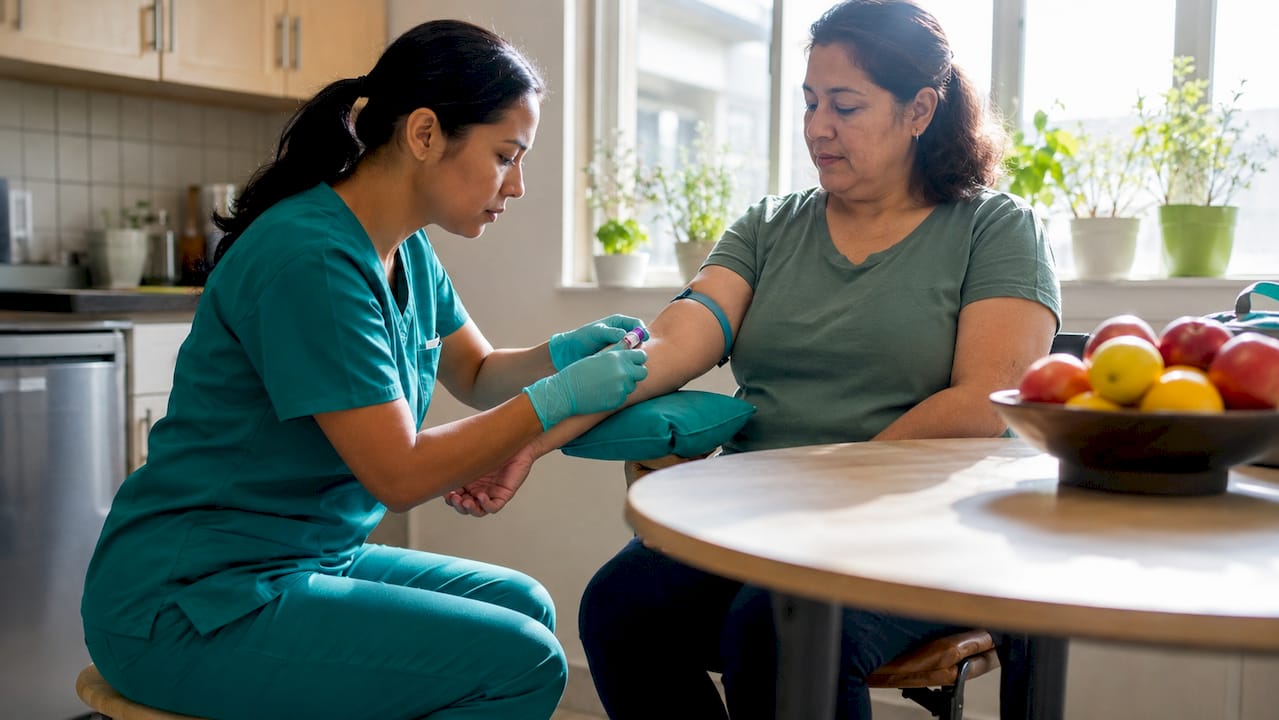
How Specimen Pickup Works for Home Patients
***
> TL;DR: > > - Home specimen pickup involves certified professionals collecting samples at your home and transporting them under clinical standards. Proper preparation and professional handling prevent sample rejection and ensure lab accuracy, especially for time-sensitive tests. The service typically costs around $50, with coverage varying by insurer, and offers a reliable alternative to traditional lab visits.
***
Home specimen pickup is a professional medical service where a certified phlebotomist or trained courier visits your home, collects biological samples under clinical conditions, and transports them directly to a diagnostic laboratory. Understanding how specimen pickup works for home patients removes the guesswork from the process and helps you prepare correctly. The service follows the same chain-of-custody standards used in hospital labs, which means your results carry the same clinical weight as samples drawn at a facility. Copergrine operates this type of service across the Greater Houston area, integrating medical courier logistics with telehealth coordination for a complete patient experience.
How does specimen pickup work for home patients?
Home specimen collection, the industry term for this service, is a scheduled medical visit conducted by a certified professional at your residence. The process mirrors what happens in a clinical lab, except the lab comes to you. Certified phlebotomists verify your identity, confirm the lab order, and collect the required sample using sterile technique. Every tube or collection card is labeled at the point of collection, not later at the lab, which is a critical distinction for chain-of-custody compliance.
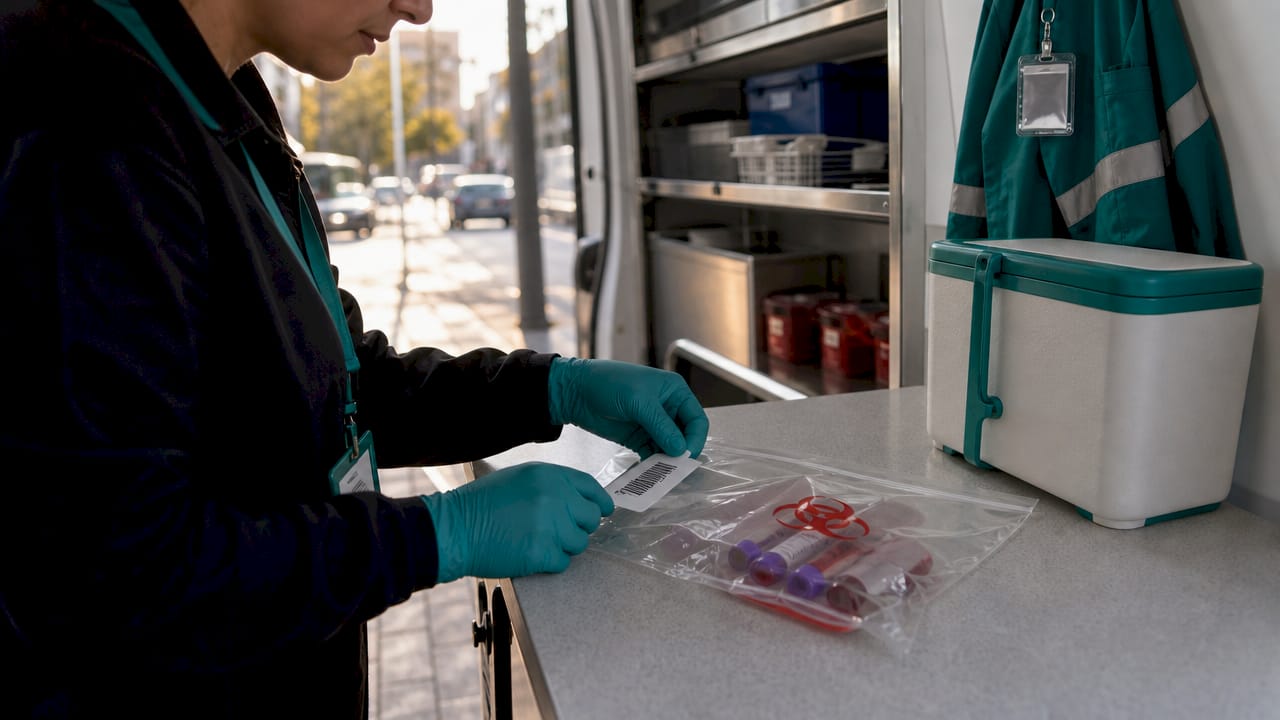
Appointments typically run 10–20 minutes, covering identity verification, sample collection, labeling, and packaging for transport. That short window is possible because certified professionals arrive with everything they need, including the correct tubes, antiseptics, labels, and biohazard packaging. After collection, the sample is sealed, documented, and handed off to a courier or transported directly to the receiving lab. The entire sequence is designed to protect sample integrity from the moment the needle enters your arm to the moment the lab technician opens the package.
What happens during a home specimen pickup appointment?
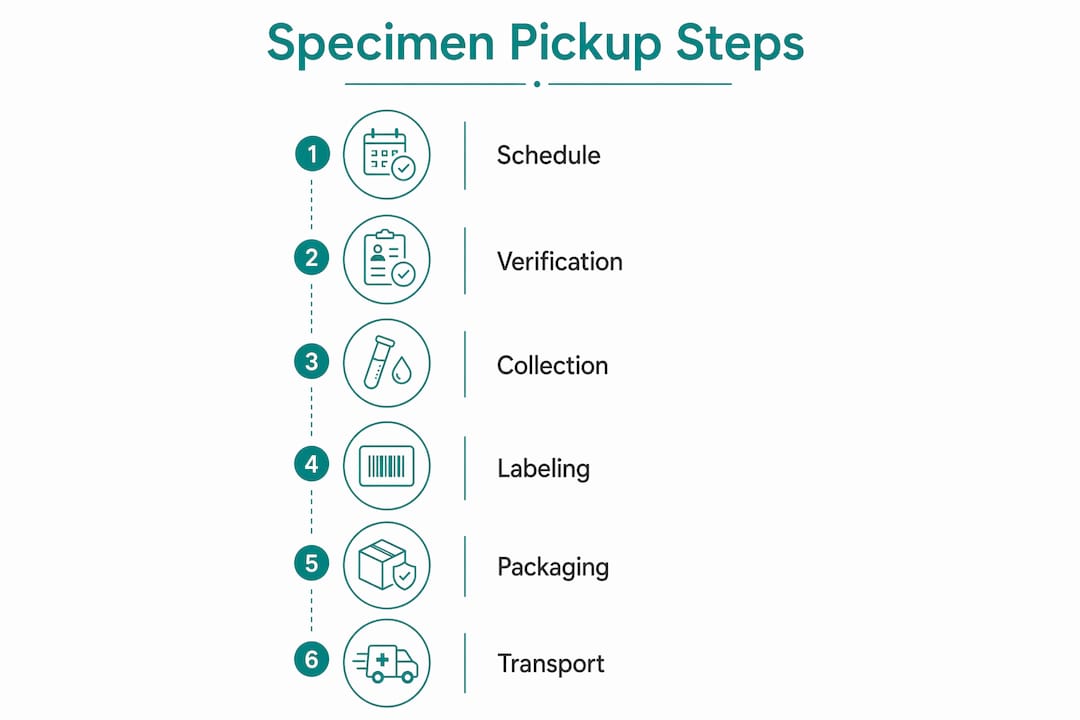
A home specimen pickup appointment follows a defined clinical sequence. Knowing each step helps you prepare and reduces delays.
- Scheduling and order confirmation. You or your provider books the appointment. The phlebotomist receives your lab order in advance and confirms the required tests, tubes, and any fasting requirements.
- Identity verification. At your door, the phlebotomist checks your name, date of birth, and lab order number. This step is non-negotiable for chain-of-custody compliance.
- Site preparation. The phlebotomist sets up a sterile field using gloves, antiseptic wipes, and a clean surface. No clinical setting is required on your end.
- Sample collection. Blood, urine, or other specimens are collected using the correct tubes in the correct draw order. Inverting anticoagulant tubes the right number of times is one of the most common steps patients miss when self-collecting.
- Labeling and packaging. Every tube is labeled immediately after collection with your name, date of birth, collection time, and collector ID. Samples are then placed in biohazard bags and sealed transport containers.
- Documentation and handoff. The phlebotomist completes a collection record and hands the package to a courier or transports it personally to the lab.
Pro Tip: Ask your provider to confirm fasting requirements at least 24 hours before your appointment. Arriving unfasted for a lipid panel or glucose test means the visit cannot proceed and you will need to reschedule.
How do costs and fees for specimen pickup work?
Home specimen collection carries a service fee separate from the cost of the lab tests themselves. The lab test fees are billed through your insurance or paid out of pocket as they would be for any lab visit. The pickup service fee covers the phlebotomist's time and travel.
Flat fees around $50 are common for specimen pickup and delivery in many regions, though costs vary by provider and geographic area. Urban markets with higher demand tend to have more competitive pricing. Rural areas may carry higher fees due to travel distance.
| Cost factor | Typical range |
|---|---|
| Mobile phlebotomy service fee | $40–$75 per visit |
| Lab test fees | Billed through insurance or separately |
| Rush or STAT pickup surcharge | Varies by provider |
| Weekend or holiday scheduling | May carry additional fee |
Insurance coverage for the service fee is inconsistent. Medicare and Medicaid cover home blood draws under specific conditions, particularly for patients who are homebound. Private insurers vary widely. The practical takeaway: confirm coverage with your insurer before booking, and ask the provider whether the service fee is billed separately from lab costs.
Compared to a traditional lab visit, home collection eliminates transportation costs, parking fees, and time away from work. For patients who rely on ride-share services or caregiver assistance to reach a lab, the $50 service fee often costs less than the alternatives.
What should patients do to prepare for specimen pickup at home?
Preparation directly affects whether your sample is usable. A rejected sample means a repeat collection, which costs time and money.
Follow these steps before your appointment:
- Read the kit instructions completely. Different tests require different collection methods. A urine culture has different handling requirements than a blood draw. Read every instruction before the phlebotomist arrives.
- Fast if required. Glucose, lipid panels, and some hormone tests require fasting. Confirm the fasting window with your provider, typically 8–12 hours.
- Stay hydrated. Drinking water before a blood draw makes veins easier to access and reduces the number of attempts needed.
- Prepare your space. Clear a table or flat surface near a chair with good lighting. The phlebotomist needs room to work safely.
- Time your collection correctly. Collect samples on days when same-day or next-day shipping is feasible. Avoid scheduling pickups on Fridays, weekends, or before holidays when courier delays are common and samples may degrade in transit.
- Handle dried blood spot cards carefully. Blood spot cards must air-dry flat for 2–3 hours away from heat, sunlight, and humidity before packaging. Rushing this step produces unusable samples.
Pro Tip: Do not assume that collecting more sample is better. Test requirements call for precise small volumes, and overfilling tubes can alter the blood-to-additive ratio and invalidate results.
Patients who over-collect or mishandle samples cause lab rejections that require repeat visits. The most common errors are incorrect sample volume, missing or illegible labels, and improper tube inversion. A certified phlebotomist eliminates all three by following kit-specific protocols exactly.
How is specimen handling and transport managed to ensure test accuracy?
Sample integrity depends on what happens between collection and lab receipt. Clinical protocols govern every step of that interval.
Chain-of-custody documentation is maintained from the moment of collection through delivery to the lab. This documentation records who collected the sample, when, under what conditions, and who transported it. Labs require this record to accept specimens for testing. Without it, the sample is rejected regardless of its physical condition.
Temperature control is the second critical variable. Many specimens require refrigerated or frozen conditions to remain viable for up to 48 hours depending on the test type. Couriers use validated cold packs, insulated containers, or dry ice for temperature-sensitive samples. Room-temperature transport is only appropriate for a narrow category of tests.
| Handling requirement | Standard protocol |
|---|---|
| Chain-of-custody record | Completed at collection, accompanies sample to lab |
| Temperature-sensitive specimens | Refrigerated or frozen transport, validated containers |
| Biohazard packaging | Triple-layer containment per DOT and IATA standards |
| Labeling | Applied at point of collection, not at the lab |
| Transport window | Same-day or next-day delivery to preserve viability |
> "Aligning sample collection timing with courier logistics is essential to prevent sample degradation and ensure arriving specimens are viable for testing."
Professional collection reduces rejection rates by following kit-specific protocols exactly. The leading causes of rejection are improper labeling, insufficient volume, and temperature excursions during transport. Each of these is preventable when a certified phlebotomist and a trained courier manage the process together. Copergrine's specimen transport service in Houston coordinates both functions under one operation, which eliminates the handoff gaps where errors typically occur.
Key takeaways
Home specimen collection is a clinical-grade service that delivers lab-accurate results when certified professionals manage collection, documentation, and temperature-controlled transport from your front door to the lab.
| Point | Details |
|---|---|
| Appointment duration | Certified phlebotomists complete home collections in 10–20 minutes, including labeling and packaging. |
| Service fees | Flat fees around $50 are common; confirm insurance coverage before booking. |
| Patient preparation | Fast if required, stay hydrated, and time your collection to allow same-day courier pickup. |
| Sample handling | Chain-of-custody documentation and temperature control are mandatory for lab acceptance. |
| Error prevention | Professional collection eliminates the most common rejection causes: mislabeling, incorrect volume, and improper tube inversion. |
Why professional specimen pickup matters more than most patients realize
I have seen patients treat home specimen collection as a casual errand. They schedule it between meetings, skip the fasting requirement, or assume the phlebotomist will sort out any prep mistakes. That assumption costs them a second appointment and delays their diagnosis by days.
The part most patients do not appreciate is how narrow the margin for error actually is. A blood-to-additive ratio that is off by a fraction of a milliliter can invalidate a coagulation panel. A dried blood spot card that was packaged 90 minutes too early produces a smeared, unusable sample. These are not edge cases. They are the most common reasons labs reject home-collected specimens.
Certified mobile phlebotomy maintains clinical handling standards identical to lab centers, which is the real value of the service. Convenience is the feature patients notice. Accuracy is the feature that actually matters. When a patient with limited mobility or a demanding schedule gets a valid result on the first draw, that is the outcome the entire system is designed to produce.
My honest advice: use a certified service over self-collection whenever your test type allows it. The cost difference is small. The difference in result reliability is not.
> — Copergrine Editorial Team
***
Copergrine's home specimen pickup services in Houston
Copergrine operates a certified medical courier service across the Greater Houston area, designed specifically for time-sensitive specimen transport from patient homes to diagnostic labs.

Copergrine's courier team coordinates directly with its telehealth clinic to confirm lab orders, schedule pickups, and track specimens in real time. Patients book through a single platform, and the courier arrives with the correct collection supplies matched to the ordered tests. The integrated EMR records every step of the chain of custody, so providers receive documentation alongside results. For patients who need reliable, same-day medical courier service in Houston, Copergrine provides a direct path from collection to confirmed lab receipt. Book your pickup to get started.
***
FAQ
What is home specimen collection?
Home specimen collection is a professional medical service where a certified phlebotomist visits your home to collect blood or other biological samples for laboratory testing. The process follows the same clinical standards used in hospital and outpatient lab settings.
How long does a home blood draw appointment take?
Most home blood draw appointments last 10–20 minutes, covering identity verification, sample collection, labeling, and packaging for transport.
Does insurance cover the specimen pickup service fee?
Coverage varies by insurer. Medicare and Medicaid cover home blood draws for homebound patients under specific conditions. Private insurance coverage is inconsistent, so confirm with your insurer before scheduling.
What causes a specimen to be rejected by the lab?
The leading causes of rejection are improper labeling, incorrect sample volume, and temperature excursions during transport. Professional collection and certified courier handling prevent all three.
How should I time my specimen collection for pickup?
Schedule collection on days when same-day or next-day shipping is available. Avoid Fridays, weekends, and holidays, when courier delays increase the risk of sample degradation before the lab receives it.