
How to Set Up a Stat Specimen Courier Service
Learn how to set up a stat specimen courier service that ensures safe, compliant, and timely transport of medical samples to protect patient outcomes.
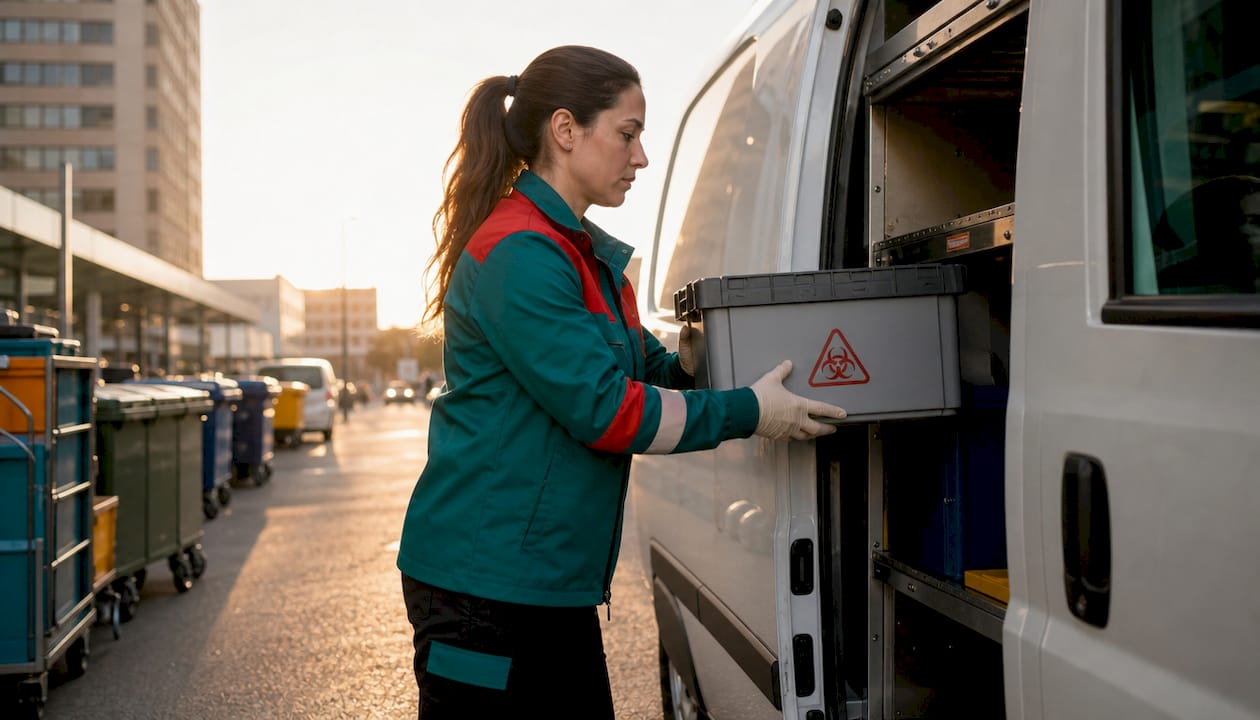
How to Set Up a Stat Specimen Courier Service
***
> TL;DR: > > - Setting up a STAT specimen courier involves strict compliance with DOT, OSHA, and HIPAA regulations, along with proper operational procedures. Proper staff training, documented processes, and certified equipment ensure specimen integrity and legal protection. Outsourcing to compliant providers like Copergrine simplifies implementation and maintains regulatory standards.
***
A STAT specimen courier service is a dedicated, same-day transport operation that moves medical samples from collection sites to laboratories under strict time, temperature, and regulatory controls. Setting up a stat specimen courier requires more than a vehicle and a route. It demands compliance with DOT, OSHA, and HIPAA regulations, verified packaging protocols, trained staff, and documented chain-of-custody procedures. Clinic administrators and healthcare providers who build this infrastructure correctly protect patient outcomes, reduce liability, and meet the expectations of CLIA-certified laboratory partners. This guide covers every operational and regulatory layer you need to get it right.
What regulatory and compliance requirements must you meet first?
Regulatory compliance is the foundation of any medical courier setup. Without it, a single incident can expose your clinic to federal penalties, civil liability, and loss of laboratory contracts.
DOT hazmat training is the first mandatory requirement. Couriers transporting Category B biological substances, which include most clinical specimens, must complete DOT-compliant hazmat training under 49 CFR 172.704. Training covers proper labeling, emergency response procedures, and packaging standards. Recertification is required every three years, and training costs typically range from $100 to $300 per employee.
OSHA bloodborne pathogen training is equally non-negotiable. Annual OSHA training is mandatory for any driver handling blood, tissue, or body fluids. The curriculum includes exposure control plans, universal precautions, and decontamination procedures. Skipping this training creates both a safety risk and a regulatory violation.
HIPAA Business Associate Agreements protect your clinic from privacy liability. HIPAA designates couriers handling patient-labeled specimens as business associates. That means every courier partner must sign a Business Associate Agreement (BAA) before handling any specimen with protected health information (PHI) on the label. Without a signed BAA, your facility remains liable for any privacy breach that occurs during transit.
> Packaging for medical specimens must include a primary sealed container, a leak-proof secondary container, and rigid outer packaging labeled "Biological Substance, Category B, UN3373." This three-layer system is required under DOT regulations and is the minimum standard for compliant specimen transport.
Additional compliance requirements include:
- A valid business license in each state where you operate
- Commercial auto insurance and cargo insurance (personal auto policies exclude commercial deliveries)
- Chain-of-custody documentation for every pickup and delivery
- Breach notification policies aligned with HIPAA requirements
- Written contracts with each healthcare client, including a Service Agreement and BAA
Pro Tip: Review your state's specific medical courier licensing requirements before launch. Some states require additional permits beyond federal DOT and OSHA mandates, and the gap between federal and state requirements is where most new operations get cited.
What tools and equipment does a stat specimen courier need?
The right equipment determines whether specimens arrive viable or rejected. Every asset in your operation must match the specimen types you transport and the delivery windows your clients require.
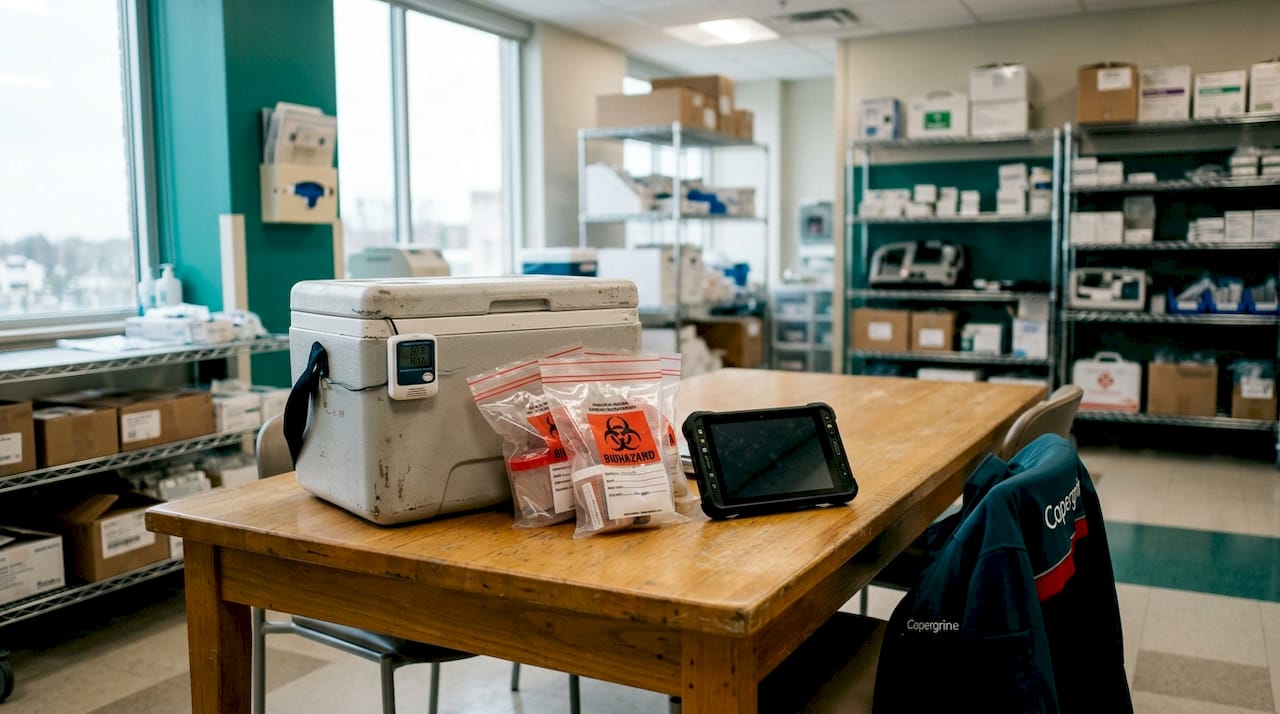
Vehicle selection depends on your service scope. A standard sedan works for low-volume urban routes. A cargo van gives you room for multiple coolers, packaging supplies, and a controlled loading environment. Refrigerated units are necessary when transporting specimens with strict cold-chain requirements, such as certain blood cultures or tissue samples.
Temperature control equipment is critical for specimen integrity. Validated insulated coolers and temperature data loggers are often required to maintain sample viability during transit. CLIA-certified labs may audit your temperature logs, so meticulous data recording is not optional. A data logger creates a timestamped record of temperature throughout the entire trip.
GPS tracking and electronic proof-of-delivery tools complete the technology layer. Electronic proof-of-delivery systems with GPS, timestamped photos, and signature capture significantly strengthen chain-of-custody documentation. These records satisfy audit requirements and build client trust over time.
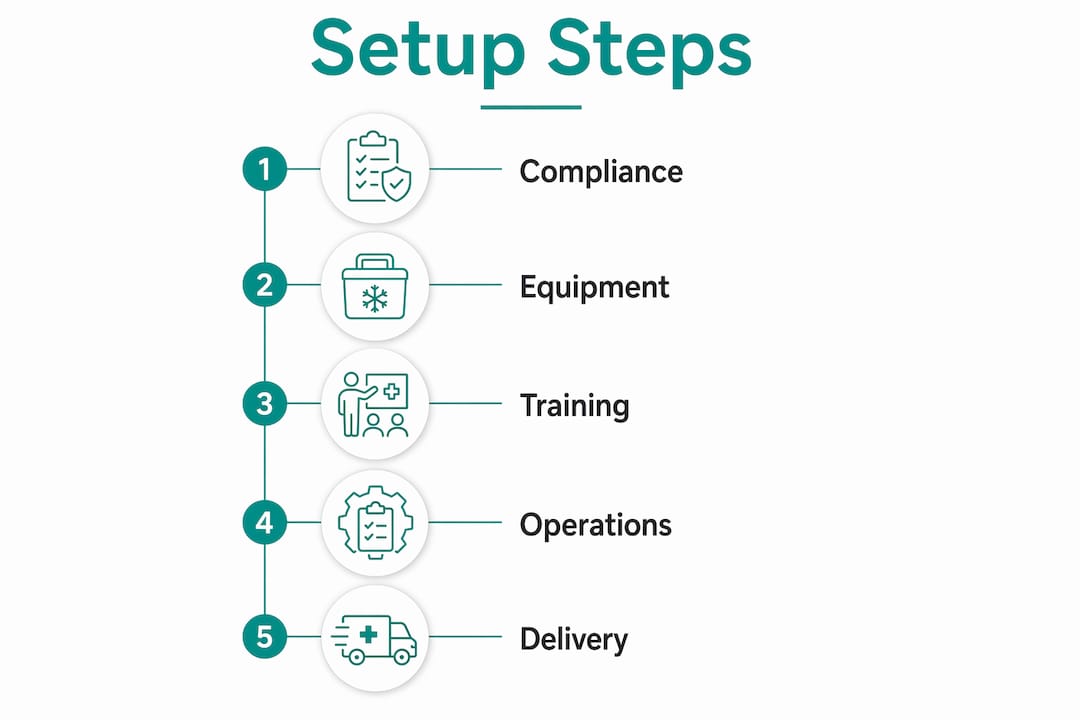
The table below compares equipment requirements across typical courier operation sizes:
| Equipment | Small-Volume Operation | High-Volume Operation |
|---|---|---|
| Vehicle type | Standard sedan or SUV | Cargo van or refrigerated unit |
| Temperature control | Passive insulated cooler | Active cooler with data logger |
| Tracking technology | Basic GPS app | Integrated GPS with e-POD system |
| Packaging supplies | UN3373 bags and boxes | Bulk UN3373 stock with spill kits |
| Documentation | Paper chain-of-custody forms | Electronic timestamped records |
Pro Tip: Purchase a calibrated temperature data logger from the start, even if your first clients do not require it. Labs upgrade their audit requirements frequently, and having the documentation ready prevents contract disruptions.
For detailed guidance on biohazard specimen packaging, review the DOT and IATA standards before ordering your first supply of UN3373 materials.
How do you recruit, train, and manage staff for this service?
Staff quality determines service reliability. A single undertrained driver can compromise specimen integrity, trigger a HIPAA violation, or create a chain-of-custody gap that voids a lab result.
Hiring criteria must be specific and documented. Every driver candidate should pass a background check and hold a clean motor vehicle record. Candidates with prior healthcare logistics or medical transport experience reduce your onboarding time and compliance risk. Document your hiring criteria in writing so client audits reflect a consistent standard.
Required training programs cover three distinct areas:
- DOT hazmat certification for Category B biological substances, including UN3373 labeling and emergency response
- Annual OSHA bloodborne pathogen training, covering exposure control, universal precautions, and decontamination
- HIPAA compliance training focused on PHI handling, BAA obligations, and breach reporting
Recertification schedules must be tracked and enforced. DOT hazmat recertification occurs every three years. OSHA bloodborne pathogen training repeats annually. HIPAA training should be refreshed whenever regulations change or a new client contract introduces new PHI handling requirements. Maintain a training log for each employee that is available for client and regulatory audits.
Emergency response protocols are a required part of driver preparation. Every driver must know how to respond to a spill, a vehicle incident, or a temperature excursion during transit. Written protocols should be kept in each vehicle and reviewed during onboarding.
Pro Tip: Build your training documentation into a single driver file from day one. When a hospital or VA facility audits your operation, they will ask for training records, background checks, and insurance certificates simultaneously. Having everything in one organized file reduces audit response time from days to hours.
For a broader view of compliance-ready logistics at scale, the requirements for hospital and VA courier contracts follow the same framework but with additional documentation layers.
What operational procedures ensure reliable same-day delivery?
Reliable stat specimen transport depends on documented procedures, not individual judgment. Every step from pickup to delivery must follow a defined protocol.
Dispatch and pickup set the pace for the entire run. Top-tier STAT services target collection within 60 minutes of a pickup request. That window requires immediate dispatch, a pre-assigned driver for each zone, and a direct communication line between the clinic and the courier. Delays at dispatch compound throughout the route.
Routing strategy directly affects delivery time. Direct, point-to-point routing with no shared manifests reduces delivery times compared to consolidated parcel networks. Each STAT run should be a dedicated trip. Combining STAT specimens with routine deliveries on the same manifest introduces timing risk and chain-of-custody complexity.
The core operational sequence for each run follows this order:
- Receive pickup request and confirm specimen type, volume, and temperature requirements
- Dispatch the nearest available driver immediately
- Driver arrives at collection site, verifies specimen labeling (UN3373 where required), and signs the chain-of-custody form
- Specimen is placed in the appropriate temperature-controlled container and secured in the vehicle
- GPS tracking activates and the client receives a pickup confirmation with estimated delivery time
- Driver follows the direct route to the receiving lab, monitoring temperature logs during transit
- Upon arrival, driver obtains a timestamped signature or electronic proof of delivery
- Completed chain-of-custody documentation is filed and made available to the client
Contingency planning covers the situations that fall outside the standard sequence. Every operation needs written protocols for vehicle breakdowns, temperature excursions, specimen spills, and lab closures. Drivers should carry spill kits, backup coolers, and a contact list for emergency lab escalation. The benefits of same-day lab transport depend entirely on the reliability of these backup procedures when the primary plan fails.
What common challenges arise and how do you avoid them?
Most failures in medical courier setup come from predictable gaps. Knowing where operations break down lets you build safeguards before the first pickup.
> The most costly compliance mistake is treating a verbal agreement with a courier as sufficient under HIPAA. Every courier handling PHI on a specimen label must sign a Business Associate Agreement. A handshake does not satisfy federal law, and the liability stays with the healthcare facility.
Insurance gaps are the most financially dangerous oversight. Personal auto insurance policies exclude coverage for commercial courier deliveries. Couriers and clinic administrators who rely on personal policies expose themselves to uncovered losses on every run. Commercial auto and cargo insurance are mandatory, and the cost is a standard operating expense, not an optional upgrade.
Packaging errors lead to specimen rejection and repeat collections. The most common mistakes include using non-rigid outer packaging, failing to apply UN3373 labels, and omitting the secondary leak-proof layer. Each error can result in a rejected specimen, a delayed diagnosis, and a damaged client relationship.
Service area sizing requires honest assessment. Promising 60-minute pickups across a territory that requires 90 minutes of drive time creates chronic failures. Start with a defined geographic zone where your vehicle and driver capacity can reliably meet your stated windows. Expand only when your current zone performs consistently.
Additional pitfalls to address before launch:
- Missing or incomplete BAA documentation with each healthcare client
- No written Service Agreement defining pickup windows, specimen handling, and liability
- Inadequate chain-of-custody records that fail lab or regulatory audits
- Underestimating the operational costs of compliant medical courier services, which typically range from $50 to $150 or more per delivery
Pro Tip: Have a healthcare attorney review your BAA template and Service Agreement before signing your first client. Generic courier contracts do not address HIPAA obligations, and the cost of a legal review is far lower than the cost of a breach investigation.
For a practical view of what clinics expect from a courier partner, the expectations for dedicated medical couriers cover service-level standards that most administrators use when evaluating new providers.
Key Takeaways
Setting up a stat specimen courier service requires simultaneous compliance with DOT, OSHA, and HIPAA standards, along with documented operational procedures and trained staff, before the first specimen moves.
| Point | Details |
|---|---|
| Regulatory compliance comes first | Complete DOT hazmat, OSHA bloodborne pathogen, and HIPAA training before any specimen transport begins. |
| BAA agreements are mandatory | Every courier handling patient-labeled specimens must sign a Business Associate Agreement with the healthcare facility. |
| Equipment must match specimen requirements | Use validated insulated coolers, temperature data loggers, and UN3373-compliant packaging on every run. |
| Dispatch speed defines service quality | Target a 60-minute pickup window using direct point-to-point routing and immediate dispatch protocols. |
| Insurance must be commercial grade | Personal auto policies do not cover courier deliveries; commercial auto and cargo insurance are required. |
What I've learned from watching courier operations fail at the compliance layer
I've reviewed enough medical courier setups to identify the single most consistent failure point: administrators treat compliance as a checklist to complete once, rather than a living system to maintain. They complete the initial DOT training, file the BAA, and then let recertification dates slip and documentation practices erode. Six months later, a lab audit or a HIPAA inquiry surfaces gaps that were entirely preventable.
The operations that hold up under scrutiny share one habit. They document everything in real time, not after the fact. Temperature logs, chain-of-custody forms, driver training records, and incident reports are completed at the moment of the event, not reconstructed later. That discipline is what separates a courier service that passes a VA or hospital audit from one that loses the contract.
The other insight that rarely appears in setup guides is this: your first clients will define your operational standards. If you accept a contract before your training program, insurance, and documentation systems are fully built, you will spend the first months of operation catching up rather than scaling. The right sequence is to build the compliance infrastructure first, then sign the first client. That order feels slower at the start and is dramatically faster over the first year.
For clinic administrators considering whether to build in-house or outsource, the case for outsourcing specimen transport is strongest when the compliance burden of maintaining a courier operation exceeds the clinical team's capacity to manage it properly.
> — Copergrine Editorial Team
***
Copergrine's medical courier services for clinics and labs
Copergrine operates a dedicated medical courier service in Dallas built specifically for healthcare providers who need compliant, same-day specimen transport without building the infrastructure themselves. The service integrates HIPAA-aware courier workflows, real-time GPS tracking, and documented chain-of-custody procedures that satisfy lab and regulatory audit requirements.
Clinic administrators who work with Copergrine gain a courier partner that already holds the compliance framework in place, including signed BAA documentation, trained drivers, and temperature-controlled transport. Copergrine's connected healthcare model also links courier logistics with its EMR platform, giving practices a single operational view of clinical and logistics workflows. Contact Copergrine to discuss service coverage and setup for your facility.
***
FAQ
What does "STAT" mean in specimen courier services?
STAT is a medical abbreviation for the Latin statim, meaning immediately. In specimen transport, a STAT designation signals that a sample requires same-day, priority pickup and delivery, typically within a 60-minute collection window.
Do all specimen couriers need a Business Associate Agreement?
Yes. HIPAA requires a signed Business Associate Agreement between any courier handling patient-labeled specimens and the healthcare facility. Without it, the facility remains liable for privacy breaches during transit.
What packaging is required for clinical specimens under DOT rules?
DOT regulations require a primary sealed container, a leak-proof secondary container, and rigid outer packaging labeled "Biological Substance, Category B, UN3373" for compliant specimen transport.
How often must medical courier drivers be recertified?
DOT hazmat recertification is required every three years. OSHA bloodborne pathogen training must be completed annually for all drivers handling potentially infectious biological materials.
Can a clinic use a standard courier service for specimen transport?
A standard courier service without DOT hazmat training, HIPAA BAA documentation, and proper specimen packaging does not meet federal compliance requirements for medical specimen transport and exposes the clinic to regulatory and financial liability.