
Medical Delivery Tracking Benefits for Healthcare Teams
Discover the medical delivery tracking benefits for healthcare teams. Improve patient safety, reduce delays, and enhance compliance with real-time monitori

Medical Delivery Tracking Benefits for Healthcare Teams
***
> TL;DR: > > - Medical delivery tracking uses GPS, barcode scanning, RFID, and sensors to monitor healthcare shipments in real time. It improves patient safety, reduces operational costs, and ensures regulatory compliance by providing automated, tamper-proof records. High-risk healthcare settings such as hospitals, labs, and clinical trials benefit most from comprehensive delivery visibility.
***
Medical delivery tracking is the real-time monitoring of medical shipments from dispatch through confirmed delivery, using GPS, barcode scanning, RFID, and digital proof-of-delivery systems. The medical delivery tracking benefits for healthcare administrators and clinical staff are direct: fewer delayed shipments, stronger regulatory compliance, and measurable improvements in patient safety. Non-adherence to medication costs U.S. healthcare over $300 billion annually. Tracking systems address a significant portion of that burden by closing the gap between prescription and verified delivery.
1. What operational efficiencies does medical delivery tracking bring?
Real-time location and status updates remove the uncertainty that causes delays in medical logistics. Dispatchers know exactly where a courier is, which allows them to reroute shipments around traffic, equipment failures, or staffing gaps before a delay becomes a missed delivery. That kind of visibility converts reactive problem-solving into proactive management.
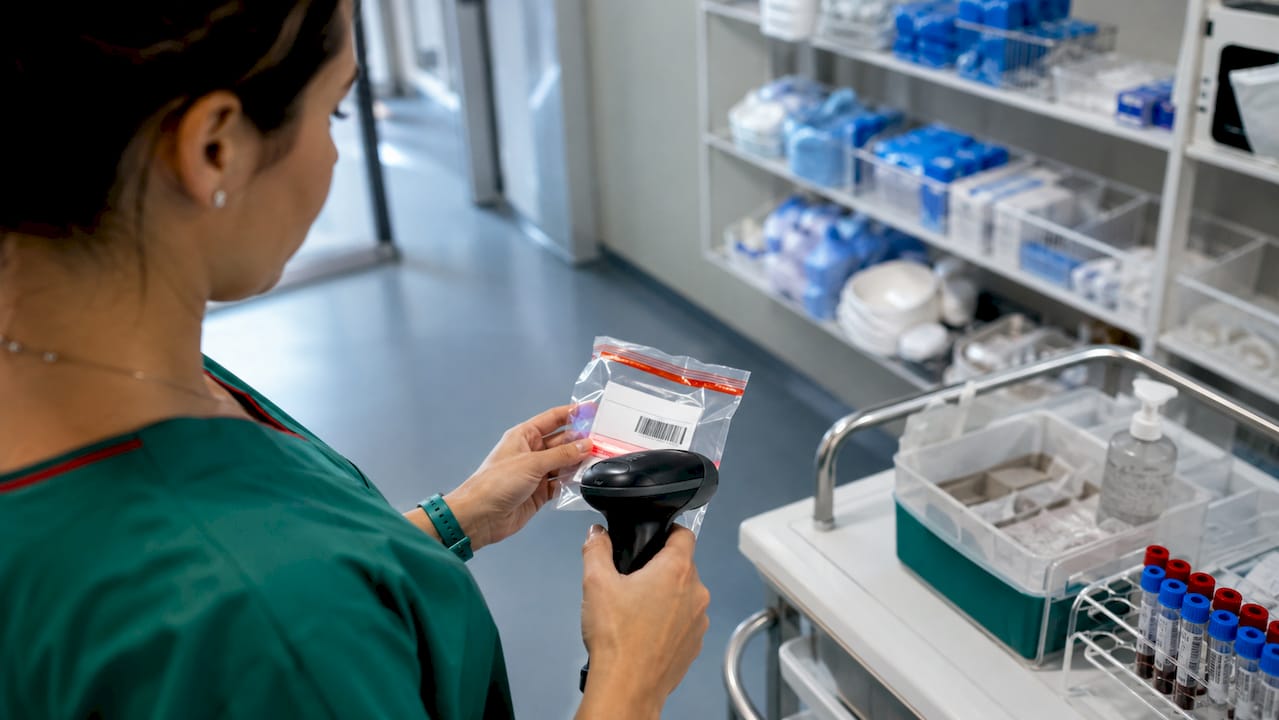
Automated digital logs replace manual paperwork at every handoff point. Each scan, timestamp, and location update feeds directly into a central record, cutting the administrative time staff spend reconciling delivery sheets at the end of a shift. Real-time tracking reduces liability and audit times by automating proof of delivery and chain-of-custody logs. That automation also reduces overtime costs tied to manual reconciliation.
Lost or misrouted shipments carry a compounding cost in healthcare: replacement orders, delayed care, and staff time spent investigating. Tracking systems reduce that loss rate by flagging exceptions the moment a shipment deviates from its expected route or delivery window. The result is lower operational cost per delivery and faster resolution when exceptions do occur.
Pro Tip: Integrate your courier platform with your EMR or dispatch system so that delivery confirmations update patient records automatically. Copergrine's model, which connects courier logistics with its proprietary EMR, shows how dispatch coordination directly reduces delivery errors.
2. How does medical delivery tracking improve patient safety?
Timely delivery of critical medicines, lab specimens, and medical equipment is a direct patient safety requirement. A delayed specimen can invalidate a diagnostic result. A missed medication delivery can trigger a preventable hospital readmission. Tracking systems create a closed loop between the courier and the clinical team, so failures surface before they affect patient care.
Heart failure patients using electronic medication tracking had 23% fewer hospital readmissions in a Kaiser Permanente study. That figure reflects what happens when verified delivery replaces assumed delivery. When care teams know a medication reached the patient, they can act on adherence data rather than guessing.
Patient self-reports on medication adherence can be incomplete. Electronic monitoring closes that gap by generating objective delivery records that care teams can trust. When those records integrate with EHR systems, clinical teams can trigger proactive interventions before a patient deteriorates.
Chain-of-custody documentation also reduces contamination and misplacement risks. Every handoff is recorded with identity, timestamp, and condition data, so if a specimen arrives compromised, the investigation takes minutes rather than days.
3. In what ways does tracking support compliance and reduce liability?
Regulatory compliance in medical logistics requires documentation that is complete, timestamped, and tamper-proof. Manual logs fail that standard because they depend on human consistency. Automated tracking systems generate records that meet HIPAA requirements and pharmaceutical chain-of-custody regulations without additional staff effort.
GPS and barcode systems produce continuous, tamper-proof digital chain-of-custody records that improve compliance and reduce errors. That continuity matters during audits, where gaps in documentation create liability exposure. Digital records close those gaps by capturing every transition point automatically.
Digital proof of delivery also reduces legal risk when a delivery dispute arises. Instead of relying on a courier's recollection or a handwritten signature, administrators can produce a timestamped record with GPS coordinates and a digital signature. Transitioning to real-time tracking automates risk management and reduces administrative time spent on manual audits. That shift frees compliance staff to focus on higher-value oversight tasks.
Pro Tip: Choose tracking systems that include temperature and humidity condition monitoring. For controlled substances and biologics, condition data is as legally significant as location data. Copergrine's compliance-ready logistics platform captures both.
4. Comparing real-time tracking technologies in medical deliveries
Different tracking technologies serve different needs in healthcare logistics. Understanding which tool fits which shipment type prevents both under-investment and over-engineering.
| Technology | Primary use | Key advantage | Limitation |
|---|---|---|---|
| GPS tracking | Route and location monitoring | Continuous real-time location data | Does not confirm handoff identity |
| Barcode scanning | Chain-of-custody at handoff points | Verified identity at each transition | Requires manual scan at each stop |
| RFID | High-volume inventory and specimen tracking | Passive, no manual scan required | Higher setup cost |
| Condition sensors | Temperature, humidity, vibration monitoring | Protects sensitive biologics and medications | Adds hardware cost per shipment |
| Mobile apps | Integrated data display for dispatchers | Combines GPS, scan, and condition data | Depends on cellular coverage |
Tracking systems monitor temperature, humidity, and vibrations, which is critical for maintaining the integrity of sensitive shipments like vaccines, blood products, and compounded medications. That monitoring layer is what separates a compliant cold-chain delivery from a liability event. The advantages of transportation management in healthcare grow significantly when condition monitoring is combined with location tracking, because both data streams feed into a single audit record.
Beyond location, chain-of-custody logs include identity, timestamp, and temperature data, which reduces investigation time for delivery exceptions. When all three data types are captured together, resolving a delivery dispute drops from hours to minutes.
5. Which healthcare settings benefit most from delivery tracking?
Medical delivery tracking delivers the greatest value in settings where timing, condition integrity, and documentation carry direct clinical or legal consequences.
Hospitals and emergency departments depend on STAT deliveries of blood products, medications, and surgical supplies. A missed or delayed delivery in this context is not an inconvenience. It is a clinical event. Real-time tracking offers enhanced accountability, reduced delays, and transparent communication in medical courier services, which is exactly what emergency settings require.
Clinical laboratories handle specimens that degrade quickly and cannot be replaced. Tracking systems confirm that specimens traveled within required temperature ranges and arrived within acceptable time windows. Without that confirmation, labs risk reporting results from compromised samples.
Clinical trial sponsors require strict chain-of-custody documentation for investigational drugs and biological samples. Regulatory submissions depend on those records. Gaps in documentation can invalidate trial data entirely.
Telehealth and pharmacy providers delivering medications to patients at home benefit from verified delivery records that support medication adherence programs. Tracking systems transform medication adherence from a self-reported estimate into a guided, data-supported process with automated alerts and care team visibility.
Home health agencies coordinating medication delivery alongside in-home visits use tracking to confirm that supplies arrive before a scheduled care visit. That coordination prevents wasted visits and supports continuity of care.
Key takeaways
Medical delivery tracking benefits are most significant when tracking systems combine real-time location data, condition monitoring, and automated chain-of-custody documentation into a single, integrated record.
| Point | Details |
|---|---|
| Patient safety improves measurably | Electronic tracking linked to 23% fewer readmissions in heart failure patients at Kaiser Permanente. |
| Compliance documentation is automated | GPS and barcode systems generate tamper-proof records that satisfy HIPAA and pharmaceutical audit requirements. |
| Condition monitoring is non-negotiable | Temperature, humidity, and vibration data protect sensitive shipments and carry legal weight in disputes. |
| Operational costs decrease | Automated logs and exception alerts reduce overtime, lost shipments, and manual reconciliation time. |
| High-risk settings gain the most | Hospitals, labs, clinical trials, and home health agencies see the greatest return from full tracking integration. |
Why I think most healthcare teams underestimate what tracking actually does
A field perspective on medical shipment visibility
I have spent years watching healthcare administrators treat delivery tracking as a logistics convenience rather than a clinical tool. That framing is the source of most implementation failures I have seen.
The moment you recognize that a delayed specimen or a missed medication delivery is a clinical event, not a courier problem, the entire calculus changes. Tracking systems are not just about knowing where a package is. They are about closing the information gap between the point of dispatch and the point of care. That gap is where errors live.
The most underused feature in most tracking platforms is the exception alert. Administrators configure systems to log deliveries but rarely set thresholds that trigger immediate notification when a shipment deviates. That passive approach defeats the purpose. Real-time monitoring only protects patients when someone acts on the data in real time.
My advice to any administrator implementing a tracking system: start with your highest-risk delivery category, whether that is STAT medications, clinical trial samples, or temperature-sensitive biologics. Build your alert thresholds and escalation protocols around that category first. Once staff trust the system in high-stakes situations, adoption across lower-acuity deliveries follows naturally.
> — Copergrine Editorial Team
***
How Copergrine supports medical delivery tracking in Houston
Copergrine's medical courier service operates across the Greater Houston area with real-time tracking built into every shipment. The platform captures GPS location, digital proof of delivery, and condition data in a single record that integrates directly with Copergrine's EMR system.
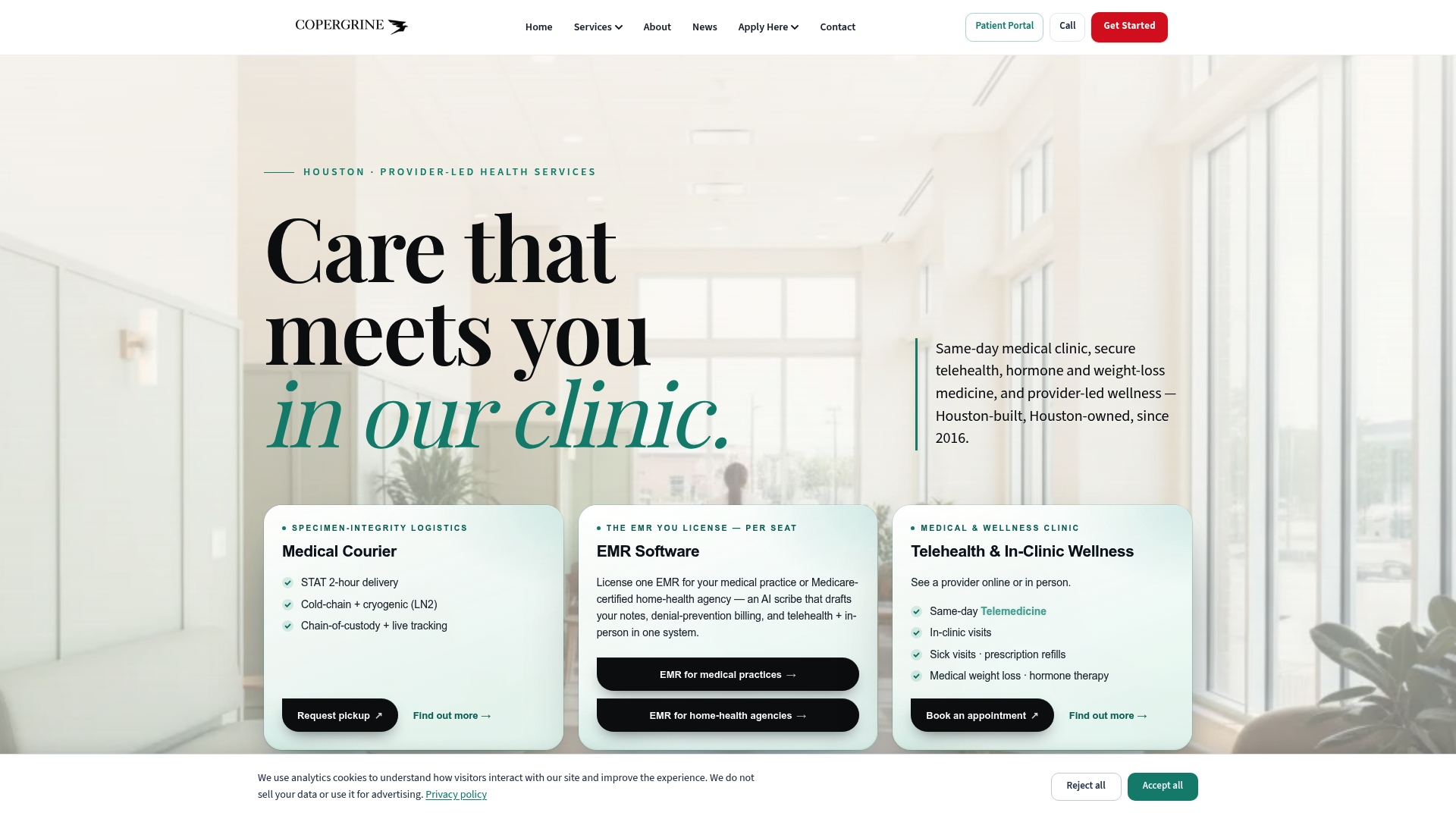
For hospitals, laboratories, and clinical trial sponsors, Copergrine provides specimen transport with full chain-of-custody documentation and compliance-ready records. For telehealth providers and home health agencies, the courier service connects directly to patient care workflows through the same platform. Explore Copergrine's full range of medical logistics services to find the delivery solution that fits your facility's compliance and care requirements.
***
FAQ
What is medical delivery tracking?
Medical delivery tracking is the real-time monitoring of healthcare shipments using GPS, barcode scanning, RFID, and condition sensors from dispatch through confirmed delivery. It generates automated chain-of-custody records at every handoff point.
How does delivery tracking reduce hospital readmissions?
Electronic medication tracking supports verified delivery and adherence monitoring. A Kaiser Permanente study found that heart failure patients using electronic tracking had 23% fewer hospital readmissions.
Which tracking technology is best for temperature-sensitive shipments?
Condition monitoring sensors that track temperature, humidity, and vibration are the most critical technology for biologics, vaccines, and compounded medications. They are most effective when combined with GPS location data in a single integrated record.
Does medical delivery tracking support HIPAA compliance?
GPS and barcode tracking systems generate tamper-proof, timestamped chain-of-custody logs that satisfy HIPAA documentation requirements and reduce audit exposure. Digital proof of delivery also decreases legal risk in delivery disputes.
What healthcare settings benefit most from real-time delivery monitoring?
Hospitals, clinical laboratories, clinical trial sponsors, telehealth providers, and home health agencies gain the greatest benefit. These settings share a common requirement: delivery timing and condition integrity carry direct clinical or regulatory consequences.