
What Is a Medical Courier Service? A Clear Guide
Discover what is medical courier service and how it ensures safe, compliant transport of vital healthcare materials across facilities.
What Is a Medical Courier Service? A Clear Guide
***
> TL;DR: > > - A medical courier service transports healthcare materials with strict regulatory compliance and detailed handling protocols. These services use GPS tracking, temperature monitoring, and documented chain of custody to ensure sample integrity and legal adherence. Choosing a compliant courier with proper training and prioritization systems is essential for reliable urgent and routine healthcare logistics.
***
A medical courier service is a specialized logistics provider that transports healthcare materials, including lab specimens, medications, medical devices, and clinical documents, under strict compliance and handling protocols. Unlike standard delivery services, medical couriers operate within a regulated framework that includes HIPAA requirements, chain of custody documentation, and temperature control standards. For hospitals, clinics, independent labs, and physician practices, these services are not optional infrastructure. They are a direct extension of clinical operations.
What does a medical courier service do?
Medical courier services transport materials that standard delivery companies are not equipped to handle. The cargo includes blood and urine specimens, biopsied tissue, organs for transplant, controlled pharmaceuticals, patient records, and medical devices. Each category carries its own handling requirements, and a single error in transit can compromise a test result, delay a procedure, or create a regulatory violation.

Specialized medical couriers maintain detailed documentation and handle shipments with the sensitivity required to preserve clinical integrity and regulatory compliance. That means more than just careful driving. It means verified pickup times, tamper-evident packaging, temperature logs, and a documented chain of custody from origin to destination.
HIPAA compliance is a non-negotiable standard for any courier transporting Protected Health Information. HIPAA requires that couriers execute Business Associate Agreements with their healthcare clients and implement administrative, physical, and technical safeguards. In practice, that translates to trained staff, secure containers, encrypted tracking systems, and documented governance procedures.
Biohazard specimens require additional handling protocols. Couriers must use validated packaging, follow OSHA bloodborne pathogen standards, and maintain separation between specimen types. Understanding how to package biohazard specimens correctly is a baseline competency, not an advanced skill, for any courier working in healthcare logistics.
Pro Tip: Ask any courier candidate whether they have executed a Business Associate Agreement with a healthcare client before. If they are unfamiliar with the term, that is your answer.
How does GPS tracking and routing work in medical courier operations?
Routing and GPS tracking are the operational backbone of a reliable medical courier network. Routing software plans pickup and delivery sequences based on time windows, traffic conditions, and priority levels. GPS tracking provides real-time location data for every vehicle in the fleet.
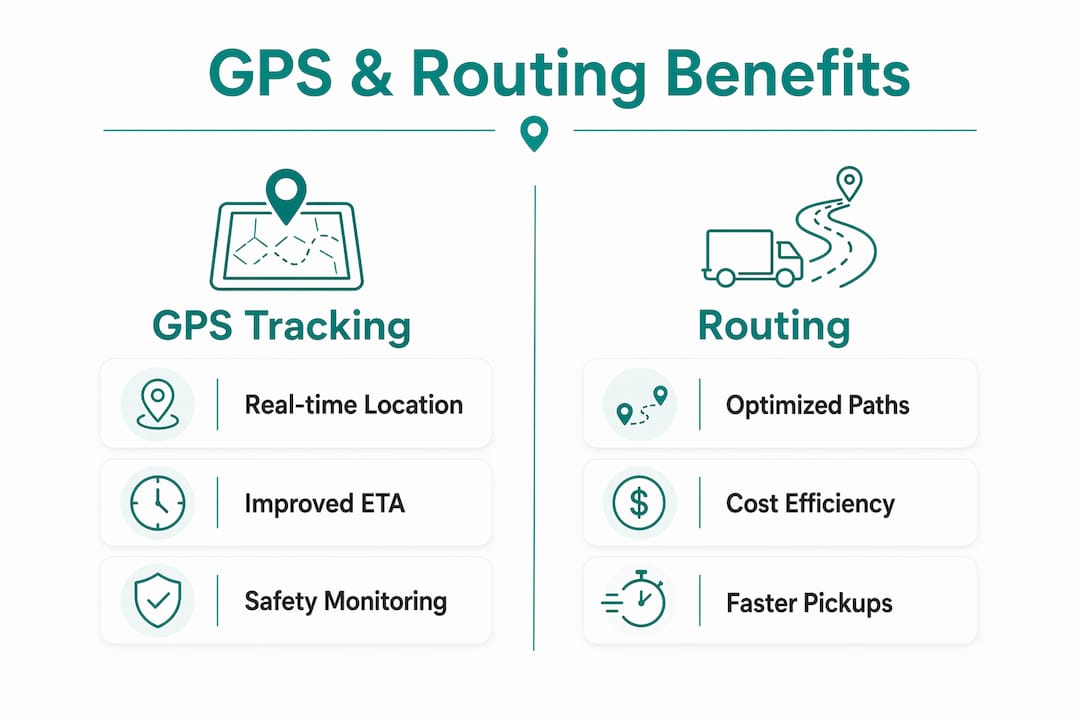
Courier visibility systems provide real-time tracking, time-stamped visits, specimen tracking, and supply documentation. That combination gives healthcare clients accountability and predictability across complex delivery networks. When a lab knows exactly when a specimen was picked up and when it arrived, they can defend the integrity of that sample in a clinical or legal context.
The table below shows how GPS and routing technology each contribute to medical delivery reliability.
| Technology | Primary function | Clinical benefit |
|---|---|---|
| GPS tracking | Real-time vehicle location | Confirms delivery windows and chain of custody |
| Routing software | Optimized pickup and drop-off sequencing | Reduces transit time and missed windows |
| Digital time stamps | Automated visit documentation | Creates auditable records for compliance |
| Temperature loggers | Continuous cold chain monitoring | Validates sample integrity during transport |
Temperature-sensitive shipments add another layer of complexity. Validated containers with calibrated temperature loggers placed correctly and documented exception handling are required to maintain biological sample integrity during transit. A standard cooler with ice packs does not meet this standard. Professional medical couriers use equipment that generates a continuous data record, not just a snapshot at pickup and delivery.
Pro Tip: When evaluating a courier's technology, ask for a sample tracking report. A credible provider can show you a time-stamped delivery log with temperature data attached.
What selection criteria matter most for choosing a medical courier?
Selecting a medical courier is a compliance decision as much as a logistics one. The wrong choice creates liability exposure, specimen integrity failures, and potential HIPAA violations. The right criteria narrow the field quickly.
- HIPAA compliance and Business Associate Agreement readiness. The courier must be willing and able to sign a BAA. Evaluating a courier's readiness to serve as a HIPAA Business Associate is the first filter. Any provider that hesitates or is unfamiliar with BAA requirements should be removed from consideration immediately.
- Courier training and certifications. Medical courier certifications typically include bloodborne pathogen training, hazardous materials handling, and HIPAA training with practical competency testing. Certifications like Certified Medical Assistant or Certified Medical Transporter, combined with OSHA-compliant training, are the recognized industry standard.
- Temperature-controlled shipping capability. The courier must demonstrate validated cold chain packaging and continuous temperature monitoring. Ask for documentation of their packaging validation process, not just a description of the equipment they use.
- Documentation accuracy and chain of custody practices. Every pickup and delivery should generate a time-stamped, auditable record. Gaps in documentation are gaps in compliance.
- Specialization in healthcare logistics. A courier that primarily handles retail or e-commerce deliveries and occasionally accepts medical runs is not a medical courier. Specialization matters because the protocols, training, and equipment requirements are fundamentally different.
The comparison below illustrates the difference between a general courier and a specialized medical courier across key criteria.
| Criteria | General courier | Medical courier |
|---|---|---|
| HIPAA compliance | Rarely applicable | Required, with signed BAA |
| Specimen handling training | Not provided | Bloodborne pathogen and OSHA certified |
| Temperature control | Basic cold packs | Validated containers with continuous logging |
| Chain of custody | Not documented | Fully documented, time-stamped |
| Regulatory specialization | None | Healthcare-specific protocols |
How do medical courier services handle urgent STAT deliveries?
STAT deliveries are time-critical medical transports where delay directly affects patient care. The term comes from the Latin statim, meaning immediately. In practice, a STAT delivery might involve a biopsy specimen that must reach a pathology lab within a defined window, a blood product needed for an active surgery, or a medication required before a patient's next scheduled dose.
Effective STAT dispatch focuses more on timing than on the shortest route. A courier dispatched to the nearest available driver rather than the most strategically positioned one can miss a critical window even on a short route. Dispatch strategy, not just routing efficiency, determines whether urgent deliveries succeed.
Delays or errors in medical courier deliveries can impact testing accuracy, inventory management, and patient care timelines. That consequence is why STAT protocols exist as a distinct operational category, not just a faster version of standard delivery.
The operational elements that define a reliable STAT courier service include:
- Dedicated dispatch protocols that flag urgent pickups above standard queue
- On-call courier availability outside standard business hours
- Direct communication channels between the courier and the receiving facility
- Real-time GPS tracking so the receiving team knows exactly when to expect arrival
- Documented delivery confirmation within minutes of drop-off
Healthcare organizations that rely on same-day lab transport understand that STAT capability is not a premium add-on. It is a baseline requirement for any courier serving acute care or diagnostic settings.
Key Takeaways
A medical courier service is defined by compliance, documentation, and specialized handling protocols that general logistics providers cannot replicate.
| Point | Details |
|---|---|
| Compliance is non-negotiable | Every medical courier must sign a HIPAA Business Associate Agreement and implement documented safeguards. |
| Technology drives accountability | GPS tracking and digital time stamps create auditable chain of custody records for every delivery. |
| STAT dispatch requires strategy | Urgent deliveries depend on dispatch prioritization, not just route optimization. |
| Selection criteria are specific | Evaluate couriers on certifications, temperature control capability, and healthcare specialization. |
| Documentation protects everyone | Accurate, time-stamped records defend specimen integrity in both clinical and legal contexts. |
What the industry gets wrong about medical courier selection
By Copergrine Editorial Team
After years of observing how healthcare organizations choose their courier partners, the pattern I see most often is this: the decision gets made by whoever handles vendor contracts, not by the clinical or compliance team. That single structural mistake produces most of the problems that follow.
The criteria that matter most, HIPAA Business Associate Agreement readiness, bloodborne pathogen training records, and validated temperature logging, are not visible on a rate sheet. They require direct questions and documentation requests. Most organizations never ask. They compare price and turnaround time, then discover the compliance gaps after a specimen is compromised or an audit surfaces a missing BAA.
The other thing I consistently see overlooked is dispatch infrastructure. A courier can have excellent drivers and good equipment and still fail on STAT deliveries because their dispatch system treats urgent and routine pickups identically. The question to ask is not "how fast are your drivers?" It is "how does your dispatch system prioritize an urgent pickup over a scheduled one?"
Technology adoption is accelerating in this space. Real-time GPS visibility, continuous temperature logging, and digital chain of custody records are no longer differentiators. They are table stakes. Any courier that cannot provide a time-stamped delivery report with temperature data attached is operating below the current standard of care for healthcare logistics.
The organizations that get this right treat their medical courier as a clinical partner, not a vendor. That shift in framing changes every conversation, from contract negotiation to daily operations.
> — Copergrine Editorial Team
***
Copergrine's medical courier services for Houston healthcare providers
Copergrine operates a HIPAA-compliant medical courier service in Houston built specifically for healthcare organizations that cannot afford logistics failures. The service covers specimen transport, pharmaceutical delivery, and clinical document handling with real-time GPS tracking and documented chain of custody on every run.

For practices and labs that need same-day delivery with full compliance documentation, Copergrine's courier division integrates directly with its EMR platform, giving clinical teams visibility into both the delivery status and the patient record in one place. That integration is what separates a connected healthcare group from a standard courier with a healthcare client list. Healthcare organizations across the Greater Houston area can contact Copergrine directly through copergrine.com to discuss service coverage and compliance requirements.
***
FAQ
What is a medical courier service?
A medical courier service is a specialized logistics provider that transports healthcare materials, including lab specimens, medications, and clinical documents, under HIPAA-compliant protocols with documented chain of custody.
What do medical couriers transport?
Medical couriers transport lab specimens, blood products, organs, controlled pharmaceuticals, medical devices, and patient records. Each material type requires specific handling, packaging, and documentation standards.
How do I track a medical courier delivery?
Most professional medical courier services provide real-time GPS tracking and digital time-stamped delivery confirmations. Courier visibility systems give healthcare clients live location data and auditable delivery records.
What certifications should a medical courier have?
Medical couriers should hold bloodborne pathogen training certification, complete HIPAA training, and demonstrate OSHA-compliant hazardous materials handling. Industry-recognized credentials include Certified Medical Transporter and equivalent competency-tested programs.
What is a STAT medical delivery?
A STAT delivery is an urgent medical transport where timing directly affects patient care, such as a biopsy specimen with a lab processing deadline or a blood product needed during an active procedure. STAT protocols require prioritized dispatch, not just faster routing.
Recommended
- Medical courier for hospitals, labs, and the VA: compliance-ready logistics at scale | Copergrine
- What practices and clinics should expect from a dedicated medical courier partner | Copergrine
- What Is On-Demand Courier Service: A Clear Guide | Copergrine
- How to evaluate a medical courier's reliability before you commit | Copergrine