
What Is Refrigerated Medical Transport: A Clinical Guide
Discover what is refrigerated medical transport and why it ensures the safety of vital medical supplies. Learn about its standards and benefits.
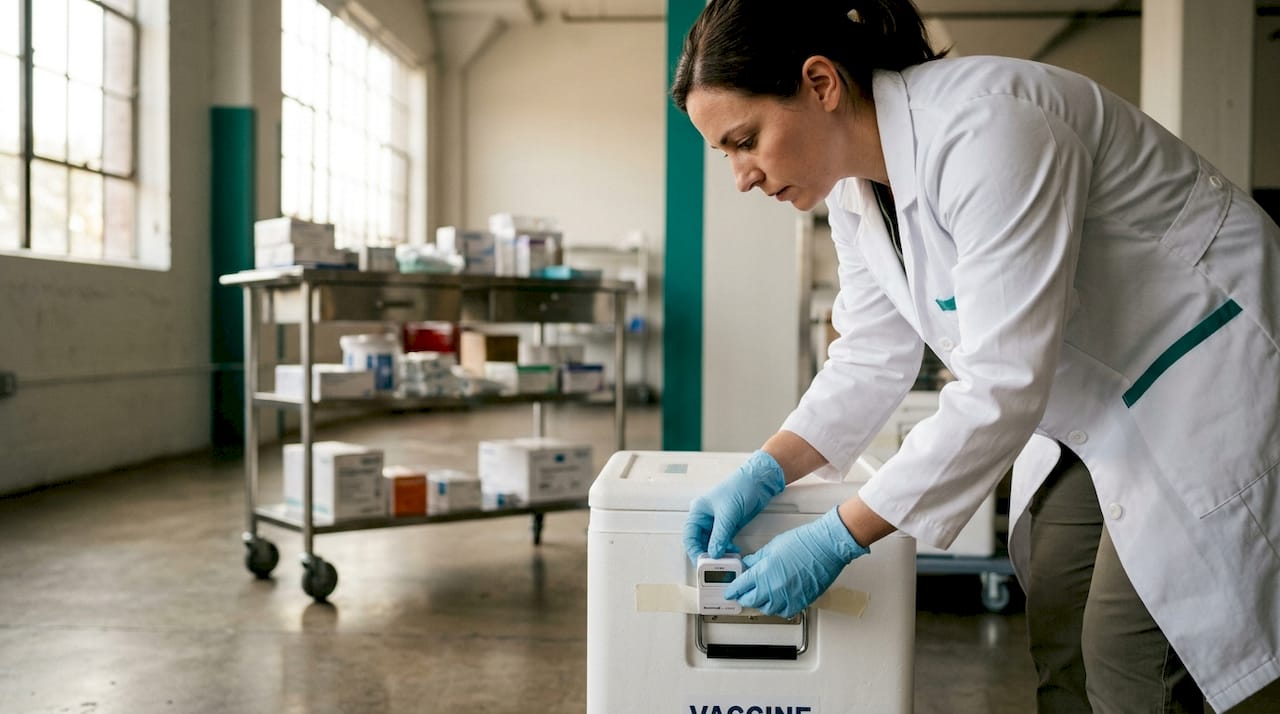
What Is Refrigerated Medical Transport: A Clinical Guide
***
> TL;DR: > > - Refrigerated medical transport maintains validated temperatures of 2°C–8°C to preserve sensitive products like vaccines and biologics during transit. It requires documented performance, continuous monitoring, and validated packaging to prevent temperature breaches that could compromise product safety and efficacy. Healthcare providers must verify vendor validation, ensure proper procedures, and train staff to maintain compliance and protect patient safety.
***
Refrigerated medical transport is defined as a specialized logistics service that maintains a validated temperature range of 2°C–8°C for medical supplies, specimens, and pharmaceuticals during transit. This is not general cooling. It is a pharmaceutical-grade discipline governed by cold chain integrity standards set by bodies including the FDA and WHO. Products that depend on this service include vaccines, biologics, insulin, coagulation studies, blood products, and transplant organs. Each of these products degrades or becomes unsafe outside its required temperature window, making the difference between a viable shipment and a total loss a matter of degrees.
What is refrigerated medical transport and why does temperature validation matter?
Medical-grade refrigerated transport requires documented, validated performance that guarantees stability for 12, 24, or 36 hours. That requirement separates it from consumer-grade refrigeration, which carries no such performance guarantee. A standard cooler with ice packs may keep a beverage cold, but it cannot reliably hold 2°C–8°C across a four-hour urban delivery route with door openings, ambient heat, and variable transit times.
The industry term for this discipline is cold chain logistics, sometimes called temperature-controlled shipping in regulatory and procurement contexts. Both terms describe the same core requirement: unbroken, documented temperature control from the point of origin to the point of receipt. A single breach anywhere in that chain can render a biologic ineffective or an organ non-viable.
Temperature deviation outside 2°C–8°C can render vaccines and biologics unsafe for patient use. That outcome carries direct clinical consequences, not just financial ones. A spoiled vaccine shipment means delayed immunizations. A compromised blood product means a canceled surgery. The stakes are that concrete.
Healthcare professionals and logistics managers who treat refrigerated transport as a commodity service consistently underestimate this risk. Validated cold chain logistics is a clinical function, not a shipping convenience.
What are the validated temperature requirements and standards for medical transport?
The 2°C–8°C range is the pharmaceutical standard for the broadest category of temperature-sensitive medical products. Products like insulin, most vaccines, and many biologics fall within this band. Some products require tighter control, such as frozen plasma at or below -18°C, or room-temperature stability for certain oral medications. Knowing which range applies to each product is the first compliance obligation for any logistics manager.
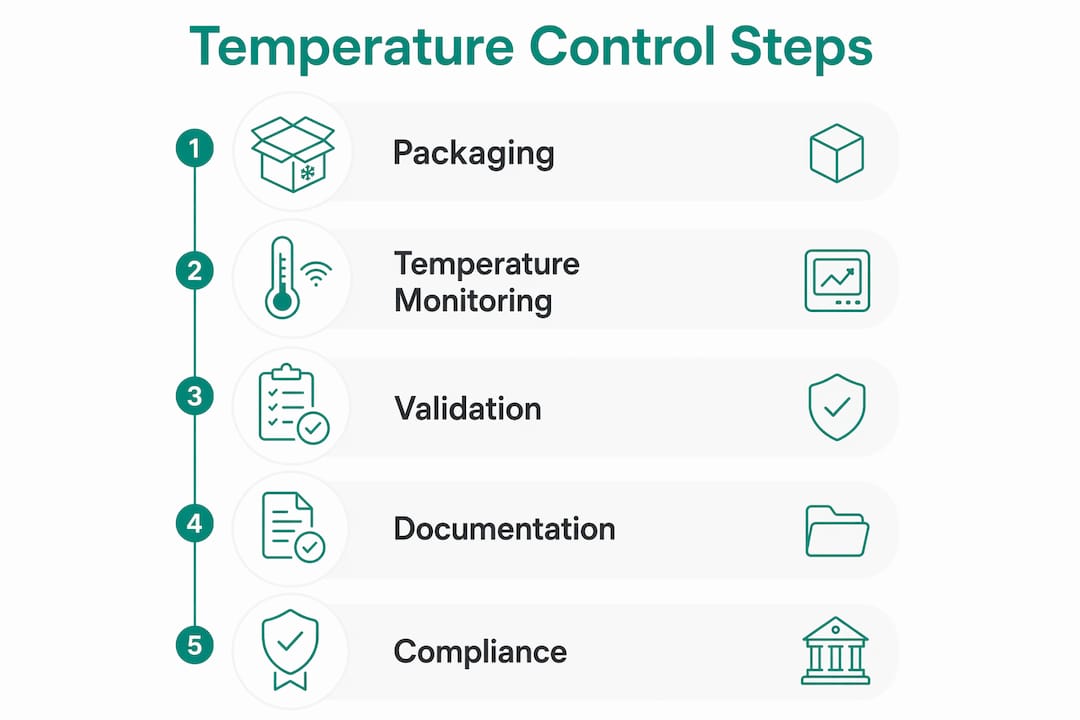
Cooling and refrigeration are not interchangeable in medical transport. General cooling solutions lack the validation documentation that pharmaceutical-grade transport requires. This distinction matters legally and clinically. If a cold chain breach occurs and your transport provider cannot produce calibrated temperature logs, your organization bears the compliance exposure.
Cold chain breaches occur when temperature deviates even briefly from the validated range. The consequences include product degradation, patient safety risk, regulatory non-compliance, and financial loss from destroyed inventory. Documenting cold chain integrity throughout the transport process is a requirement under healthcare quality standards, not an optional best practice.
Stability testing for pharmaceutical transport typically validates performance at 12, 24, and 36-hour intervals. These durations reflect real-world transit scenarios: a same-day local delivery, an overnight regional shipment, and a multi-leg interstate transfer. Your transport solution must be validated for the duration that matches your actual use case.
Pro Tip: Request the stability validation certificate from any transport vendor before signing a service agreement. If they cannot produce one, their solution is not pharmaceutical-grade, regardless of how it is marketed.
Regulatory guidance from the FDA, WHO, and the NHS Supply Chain all converge on the same core requirement: temperature control must be continuous, documented, and traceable. These are not aspirational standards. They are the baseline for compliant medical transportation solutions.
What technologies and equipment are used in refrigerated medical transport?
Two broad categories of equipment support temperature-controlled shipping: active systems and passive systems. Active systems use powered refrigeration units, such as those found in dedicated refrigerated vans and trucks, to maintain temperature continuously regardless of ambient conditions. Passive systems rely on insulated packaging, validated gel packs, or phase-change materials to hold temperature for a defined period without external power.

| Equipment type | How it works | Best use case |
|---|---|---|
| Active refrigerated vehicle | Powered compressor maintains set temperature continuously | Long-distance or multi-stop routes |
| Validated insulated shipper | Phase-change materials hold temperature for a defined window | Short-duration, point-to-point delivery |
| Portable data logger | Records temperature at set intervals throughout transit | All shipments requiring audit trail |
| Calibrated cooler with gel packs | Pre-conditioned packs maintain range for limited hours | Emergency or backup transport only |
Continuous temperature monitoring and data logging are non-negotiable components of validated refrigerated transport. A data logger records temperature at defined intervals, typically every few minutes, and produces a report that confirms the shipment stayed within range for its entire journey. That report is the audit trail your compliance team needs.
Specialized refrigerated vehicles used for organ transport go further. Organ transport requires mobile refrigerated environments where system performance directly determines organ viability. These vehicles maintain precise conditions and are often equipped with backup power systems to prevent any interruption during transit to transplantation centers.
Validated packaging solutions for pharmaceutical-grade transport include pre-qualified insulated shippers tested to specific temperature profiles. These are not off-the-shelf foam boxes. They are engineered systems with documented performance data. Insulated foam boxes with standard ice packs cannot guarantee temperature stability for the durations pharmaceuticals require, which is a common and costly misconception in outpatient and clinic settings.
Pro Tip: For any shipment exceeding two hours in transit, require an active monitoring device, not just passive packaging. Passive solutions are validated for specific conditions that may not match your actual route.
How should healthcare professionals ensure compliance in refrigerated transport?
Compliance in refrigerated medical transport depends on three pillars: vendor validation, documentation, and staff training. Failing any one of them creates liability exposure and patient safety risk.
- Verify vendor equipment validation. Selecting logistics partners who provide documentation of their equipment's validated temperature performance is the first and most critical step. Ask for calibration certificates, stability test results, and sample temperature logs from previous shipments.
- Require end-to-end temperature records. Every shipment should produce a temperature log that covers the full transit window. Gaps in the log are treated as breaches under most regulatory frameworks. Confirm that your vendor's data logger timestamps align with pickup and delivery records.
- Identify and mitigate risk points. The highest-risk moments in any cold chain are handoffs: loading, unloading, and transfers between vehicles or facilities. Each handoff is an opportunity for a temperature excursion. Protocols should define maximum exposure times at each transition point.
- Train staff on cold chain protocols. Healthcare providers must train staff and maintain audit trails for temperature-sensitive transport to meet regulatory requirements. Training should cover proper packaging procedures, what to do when a breach is suspected, and how to escalate to the logistics provider.
- Conduct periodic audits. Review temperature logs from completed shipments on a scheduled basis. Patterns of near-excursions, such as temperatures consistently reaching 7.8°C on afternoon routes, signal a systemic problem before it becomes a documented breach.
The temperature chain of custody for clinical specimens follows the same logic as legal chain of custody: every transfer must be recorded, every handler identified, and every deviation documented. Treat it with the same rigor.
What are the unique challenges for different medical product categories?
Different medical products carry different temperature sensitivities, and a single transport protocol does not fit all of them. Understanding these distinctions prevents costly errors.
Vaccines are among the most temperature-sensitive products in routine healthcare logistics. Most require continuous 2°C–8°C storage and cannot be frozen. A single freeze-thaw cycle destroys many adjuvanted vaccines permanently, with no visible change in appearance. This makes visual inspection an unreliable quality check, which is why continuous data logging is the only reliable safeguard.
Blood products and coagulation studies require strict 2°C–8°C control during transport, but some components, such as platelets, require agitation and specific temperature windows that differ from red blood cells. Each product type has its own handling protocol, and logistics managers must confirm that their transport provider understands these distinctions at the product level, not just the category level.
Biologics, including monoclonal antibodies and cell therapies, are among the most expensive and fragile products in the cold chain. Transit time directly affects packaging choice for these products. A two-hour local delivery may use a validated passive shipper, while a six-hour multi-stop route requires an active refrigerated vehicle with continuous monitoring.
Organ transport demands the most specialized approach of any medical product category. Viability windows are measured in hours, not days, and the transport environment must maintain precise conditions without interruption. These shipments typically involve dedicated vehicles, real-time monitoring, and direct coordination with transplant teams.
Validated packaging and continuous monitoring prevent temperature excursions across all these categories. The specific solution varies by product, but the underlying requirement does not: documented, unbroken temperature control from origin to destination.
Key Takeaways
Refrigerated medical transport is a validated, documented discipline that requires pharmaceutical-grade temperature control, continuous monitoring, and full traceability to protect patient safety and regulatory compliance.
| Point | Details |
|---|---|
| Validated temperature range | Medical transport must maintain 2°C–8°C continuously, with documented proof for 12, 24, or 36-hour windows. |
| Active vs. passive systems | Active refrigerated vehicles suit long routes; validated passive shippers work only for short, defined transit windows. |
| Cold chain breach risk | Even brief temperature deviations can destroy biologics, vaccines, and blood products, creating patient safety and compliance failures. |
| Vendor selection criteria | Require calibration certificates, stability test results, and sample temperature logs before committing to any transport provider. |
| Staff training and audit trails | Protocols, training, and periodic log reviews are required to maintain regulatory compliance across all shipments. |
Why most healthcare teams are still getting cold chain logistics wrong
I have spent years reviewing cold chain failures in healthcare settings, and the pattern is almost always the same. The organization chose a transport vendor based on price and proximity, not on validated performance. Nobody asked for a stability certificate. Nobody reviewed a temperature log until a product was already compromised.
The uncomfortable truth is that most healthcare professionals assume refrigeration equals validation. It does not. A refrigerated van without calibrated monitoring and documented stability testing is not a compliant medical transport solution. It is a vehicle with a cold box.
The other misconception I see regularly is that passive packaging is a safe fallback for "short" trips. Healthcare teams routinely underestimate transit time when you account for traffic, multiple stops, and handoff delays. A delivery estimated at 90 minutes can easily run three hours. Passive shippers validated for two hours do not magically extend their performance window.
The evaluation of a medical courier's reliability before you commit to a contract is not a procurement formality. It is a clinical decision. The questions you ask a transport vendor before the first shipment are the same questions a regulator will ask after a cold chain failure. Ask them first.
> — Copergrine Editorial Team
***
Copergrine's temperature-controlled courier services for healthcare providers
Healthcare providers managing temperature-sensitive shipments need a courier that treats cold chain compliance as a clinical standard, not a logistics afterthought.
Copergrine's temperature-controlled courier service operates with validated equipment, continuous data logging, and full documentation at every step. Each shipment produces a temperature record that meets healthcare quality standards and supports your compliance audit trail. Copergrine integrates courier logistics directly with clinical workflows, supporting specimen transport, pharmaceutical delivery, and time-critical medical supply runs across the Greater Houston area. For providers in the Dallas region, Copergrine's Dallas medical courier service extends the same validated, documented cold chain capabilities. Contact Copergrine to confirm your transport requirements are met with pharmaceutical-grade reliability.
***
FAQ
What is the standard temperature range for refrigerated medical transport?
The validated standard for most medical products is 2°C–8°C. Deviation outside this range can render vaccines, biologics, and blood products unsafe for patient use.
How is refrigerated medical transport different from general cooling?
Refrigerated medical transport uses validated equipment with documented stability testing and continuous temperature monitoring. General cooling solutions lack this validation and cannot reliably maintain pharmaceutical-grade conditions.
What causes a cold chain breach during medical transport?
A cold chain breach occurs when temperature deviates from the validated range at any point during transit, including during loading, unloading, or vehicle transfers. Even brief excursions can compromise product integrity.
What documentation should a refrigerated transport provider supply?
Providers should supply calibration certificates for their equipment, stability test results for the transport duration, and a continuous temperature log for every completed shipment.
How long must refrigerated medical transport maintain validated temperature?
Stability validation typically covers 12, 24, and 36-hour windows to reflect real-world transit scenarios from same-day local deliveries to multi-leg regional shipments.
Recommended
- Rural-to-urban specimen transport: handling temperature-sensitive samples | Copergrine
- Temperature-Controlled Medical Courier | Copergrine | Copergrine
- Temperature chain of custody for clinical specimens: a primer for lab managers | Copergrine
- Why Clinics Outsource Specimen Transport: A Practical Guide | Copergrine