
Why Clinics Outsource Specimen Transport: A Practical Guide
Discover why clinics outsource specimen transport to enhance safety, compliance, and efficiency. Learn key benefits for better patient outcomes.
Why Clinics Outsource Specimen Transport: A Practical Guide
***
> TL;DR: > > - Clinics outsource specimen transport to specialized couriers to better control pre-analytical errors, ensure regulatory compliance, and reduce operational burdens. These providers maintain validated conditions, detailed documentation, and secure systems that support patient safety and audit readiness. Outsourcing offers scalable, consistent logistics, shifting compliance risks from clinics to dedicated service providers.
***
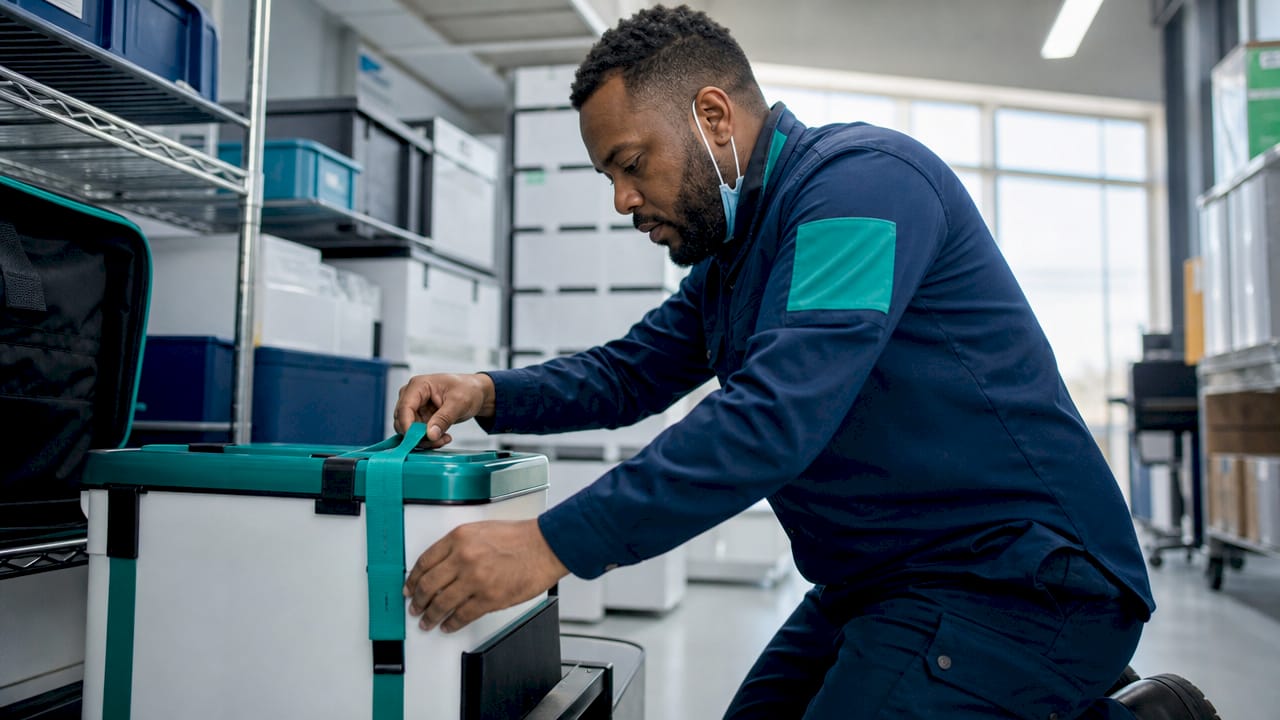
Specimen transport outsourcing is defined as the practice of contracting a specialized third-party courier to collect, handle, and deliver clinical specimens from a clinic to a reference or hospital laboratory. Clinics choose this model because it directly addresses the three most consequential risks in laboratory medicine: pre-analytical error, regulatory non-compliance, and operational inefficiency. The industry term for this function is "medical specimen courier services," and understanding why clinics outsource specimen transport requires examining each risk category in detail. CLSI literature identifies transport temperature deviations and excessive transit times as major, often irreparable, sources of pre-analytical error. For healthcare administrators and clinic managers, outsourcing is not simply a cost decision. It is a risk management and quality assurance decision with direct consequences for patient outcomes.
***
Why clinics outsource specimen transport: the pre-analytical error case
Pre-analytical errors account for the majority of laboratory mistakes, and most originate during transport rather than in the lab itself. Pre-analytic errors occur before a specimen reaches the analyzer, making them invisible to lab quality control systems unless the sample is rejected outright. Controlling transport conditions is therefore the single most effective intervention a clinic can make to improve test accuracy.
Three variables drive pre-analytical failure during transit:
- Temperature deviation. Many analytes degrade rapidly outside prescribed ranges. State-level guidelines for influenza virus specimens, for example, require refrigerated transport at 2–8°C within 72 hours, or frozen storage if delivery is delayed. A general-purpose courier without validated cold-chain equipment cannot reliably meet this standard.
- Excessive transit time. Certain coagulation factors and cellular components begin to change within hours of collection. Delays caused by inefficient routing or missed pickups translate directly into rejected specimens and repeat draws for patients.
- Agitation and improper handling. Mechanical disruption during transport causes hemolysis in blood specimens, which invalidates results for potassium, lactate dehydrogenase, and several other analytes.
Specialized medical couriers address all three variables through validated packaging, calibrated transport containers, and route-optimized scheduling. Specimen quality is more about controlling pre-analytical variance than simply moving samples quickly. That distinction separates a compliant courier from a general delivery service.
Pro Tip: Ask any prospective courier to provide documentation of their temperature validation studies for the specific specimen types your clinic sends. A credible partner will have this on file, not just a general claim of "cold-chain capability."
***
How does chain of custody support regulatory compliance?
Chain of custody in specimen transport is the documented, unbroken record of who handled a specimen, under what conditions, and at what time from collection through laboratory receipt. Chain of custody documentation meets HIPAA, CLIA, and CAP requirements by providing traceability and audit-ready records at every transfer point. For clinic administrators, this documentation is not optional. It is the evidentiary backbone of accreditation surveys and regulatory audits.
The compliance requirements across these three frameworks align around four documentation elements:
- Timestamped handoff records. Every transfer of custody, from clinic staff to courier and from courier to lab, must be recorded with the time, location, and identity of both parties.
- Environmental condition logs. Temperature log entries every 30–60 minutes during transit provide stronger audit evidence than a simple on-time delivery confirmation. Interval reporting proves specimen stability throughout the journey, not just at the endpoints.
- Digital audit trails. Digital chain-of-custody systems use barcodes, electronic signatures, and GPS to generate tamper-resistant records. These replace paper logs that are vulnerable to loss, alteration, and illegibility.
- Business Associate Agreements. HIPAA-based Business Associate obligations require signed agreements between the clinic and any courier that handles protected health information. The agreement must specify the courier's security controls, breach notification procedures, and permissible uses of patient data.
> "HIPAA responsibilities extend beyond clinic walls to technology vendors in courier chains, requiring comprehensive Business Associate Agreements that cover every system the courier uses to process or transmit patient information."
CAP accreditation standards and CLIA regulations reinforce these requirements by mandating that laboratories verify the integrity of specimens upon receipt. When a courier's documentation is incomplete or inconsistent, the lab bears the burden of rejection and the clinic bears the burden of repeat collection. A HIPAA-aware courier workflow eliminates that gap by making compliance a built-in feature of the transport process rather than an afterthought.
***
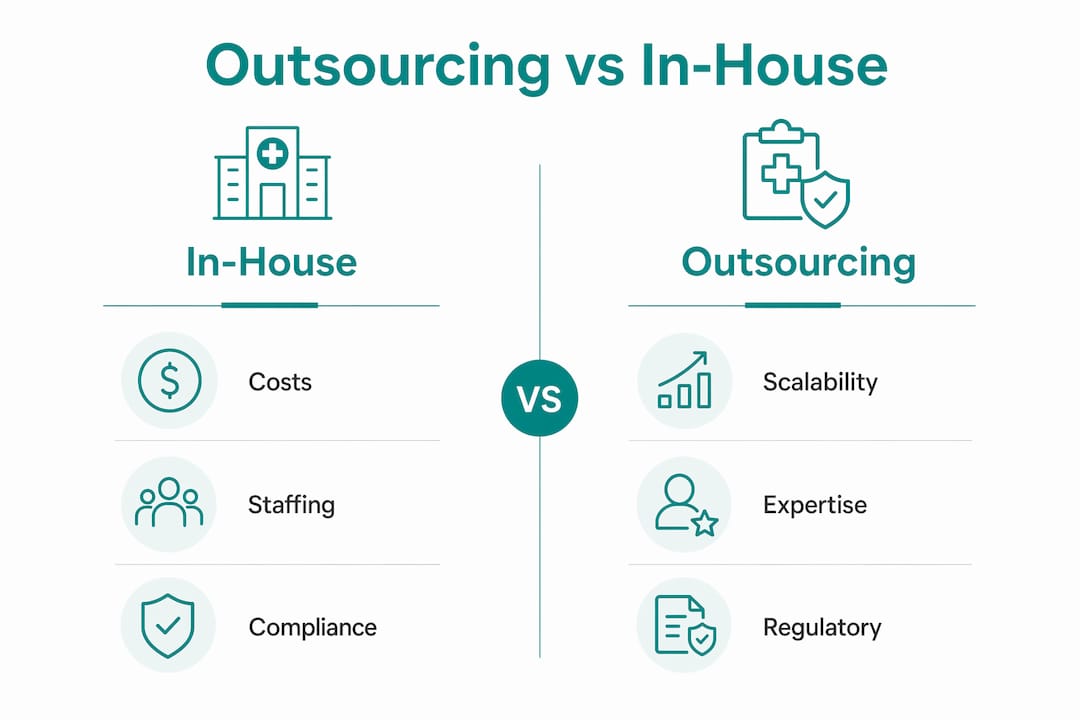
Operational and cost benefits of outsourcing versus in-house transport
Running a compliant in-house specimen courier operation is operationally demanding in ways that are easy to underestimate at the outset. Clinics that manage transport internally must maintain a fleet of vehicles, carry appropriate insurance, and keep drivers current on hazardous materials regulations. Driver training for hazardous materials transport must be renewed every three years under 49 CFR §172.704. That requirement alone creates a recurring compliance obligation that requires administrative tracking and budget allocation.

The staffing dimension compounds the challenge. Internal courier staff are subject to turnover, sick leave, and scheduling gaps. Outsourcing adds quality consistency and reduces the risk of compliance gaps caused by turnover or understaffing. A specialized courier service maintains a trained workforce as its core business, not as a secondary function of a clinical operation.
| Factor | In-house transport | Outsourced courier |
|---|---|---|
| Vehicle and maintenance costs | Clinic bears full cost | Included in service contract |
| DOT hazmat training compliance | Clinic manages internally | Courier manages and documents |
| Scheduling flexibility | Limited by staff availability | On-demand and scalable |
| Audit documentation | Manual or ad hoc | Systematic and digital |
| Compliance risk exposure | Clinic retains all risk | Shared via Business Associate Agreement |
Medical courier services offer scalable, flexible scheduling that adjusts to a clinic's actual volume rather than a fixed staffing model. A clinic that adds a new service line or expands hours can increase pickup frequency without hiring additional staff or purchasing another vehicle.
Pro Tip: When evaluating cost, include the administrative time your staff currently spends managing transport logistics. That hidden labor cost often exceeds the direct expense of a courier contract.
***
What should clinics look for in a specimen transport partner?
Selecting a specimen transport partner is a controlled-process design decision, not a vendor procurement exercise. The courier's protocols become an extension of your clinic's quality management system. A weak link in their process creates a defect in yours.
- Validated transport conditions. Request written validation data showing that the courier's containers maintain required temperature ranges for the duration of your longest typical route. Verbal assurances are not sufficient for CLIA or CAP purposes.
- Compliance documentation and training records. Verify that drivers hold current DOT hazmat certifications and that the courier maintains records of training completion. Ask specifically how they document and respond to a temperature excursion during transit.
- Direct point-to-point custody for critical specimens. Avoiding hub-and-spoke models for critical specimens minimizes handoff risk and sample instability. Each additional custody transfer is an opportunity for documentation failure or physical mishandling. For STAT or high-complexity specimens, direct routes are the standard to require.
- SOP alignment. The courier's standard operating procedures should be reviewed against your clinic's laboratory interface requirements. Misaligned labeling conventions, packaging standards, or pickup windows create friction that erodes specimen quality over time.
- Technology integration for traceability. A courier that offers real-time GPS tracking and electronic proof of delivery integrates with your clinic's lab transport workflow and gives your team visibility without requiring manual follow-up calls.
- Reliability evaluation before commitment. Before signing a contract, review the courier's on-time performance data and ask for references from clinics with similar specimen volumes and types. Evaluating a courier's reliability before committing protects your clinic from discovering service gaps after specimens are already in transit.
The best practices for specimen transport converge on one principle: treat the transport leg as a clinical process, not a logistics afterthought. Every criterion above reflects that standard.
***
Key Takeaways
Clinics outsource specimen transport because specialized couriers control pre-analytical variables, maintain audit-ready chain of custody, and reduce the staffing and compliance burdens that make in-house transport operationally unsustainable.
| Point | Details |
|---|---|
| Pre-analytical error prevention | Specialized couriers control temperature, transit time, and agitation to protect specimen integrity. |
| Regulatory compliance | Chain of custody documentation supports HIPAA, CLIA, and CAP audit requirements at every handoff. |
| Cost and staffing efficiency | Outsourcing eliminates vehicle overhead and removes the clinic's burden of maintaining DOT-certified drivers. |
| Risk transfer via BAA | A signed Business Associate Agreement shifts HIPAA compliance obligations to the courier for PHI handling. |
| Partner selection criteria | Validate transport conditions, training records, and SOP alignment before committing to any courier contract. |
***
What experience actually teaches about outsourcing specimen transport
By Copergrine Editorial Team
Most clinic administrators approach courier outsourcing as a procurement decision. They compare prices, check for HIPAA language in the contract, and move on. That approach misses the most consequential variable: whether the courier's operational protocols actually match the clinical requirements of the specimens being transported.
I have seen clinics sign contracts with couriers that checked every compliance box on paper but used generic coolers with no interval temperature logging. When a CAP inspector asked for temperature records from the previous quarter, the clinic had delivery timestamps and nothing else. That gap cost them a corrective action finding. The lesson is that compliance documentation and compliance practice are not the same thing.
The other pattern I see consistently is clinics underestimating the hub-and-spoke risk. A courier that routes specimens through a central sorting facility before final delivery adds a custody transfer that most clinic administrators never see. For routine specimens, that may be acceptable. For coagulation panels, viral cultures, or any time-sensitive analyte, that intermediate stop can invalidate the sample before it reaches the analyzer.
The most reliable outsourcing relationships I have observed share one characteristic: the clinic treated the courier selection as a quality assurance process, not a vendor search. They validated transport conditions with actual data, reviewed driver training records, and aligned SOPs before the first pickup. That upfront rigor pays for itself the first time an accreditation surveyor asks for your chain-of-custody documentation.
> — Copergrine Editorial Team
***
Copergrine's medical courier service for compliant specimen transport
Clinics across the Greater Houston area rely on Copergrine for specimen transport that meets the compliance and quality standards described throughout this article.
Copergrine's medical courier service provides temperature-monitored transport, digital chain-of-custody documentation, and flexible scheduling designed for clinical environments. Every run includes audit-ready records that support HIPAA, CLIA, and CAP requirements without additional administrative work from your team. Copergrine operates as a Business Associate and provides the signed agreements your compliance program requires. For clinic administrators who need reliable, scalable transport without the overhead of an internal fleet, Copergrine's connected healthcare platform integrates courier logistics with EMR and telehealth services in one coordinated system.
***
FAQ
Why do clinics outsource specimen transport instead of using staff?
Maintaining a compliant in-house courier operation requires DOT hazmat training, vehicle management, and continuous documentation, which creates overhead that most clinics cannot sustain efficiently. Outsourcing transfers those obligations to a specialized service while preserving specimen quality.
What regulations govern outsourced specimen transport?
HIPAA, CLIA, and CAP all impose requirements on specimen transport, including chain-of-custody documentation, temperature control, and Business Associate Agreements with any courier that handles protected health information.
How does temperature monitoring work during specimen transport?
Compliant couriers use validated containers and log temperature readings at 30–60 minute intervals throughout transit. These interval logs provide the audit evidence that accreditation bodies require to confirm specimen stability.
What is the biggest risk of using a non-specialized courier?
The primary risk is pre-analytical error from temperature deviation or excessive transit time, both of which can render a specimen unacceptable for analysis and require a repeat patient draw.
What should a Business Associate Agreement with a courier include?
The agreement must specify the courier's security controls for protected health information, breach notification timelines, permissible data uses, and the technology systems used to process or transmit patient data during transport.