
After-Hours Specimen Courier Logistics: A Lab Manager's Guide
Master after-hours specimen courier logistics to ensure timely, compliant, and safe transport of medical samples. Discover key strategies now!
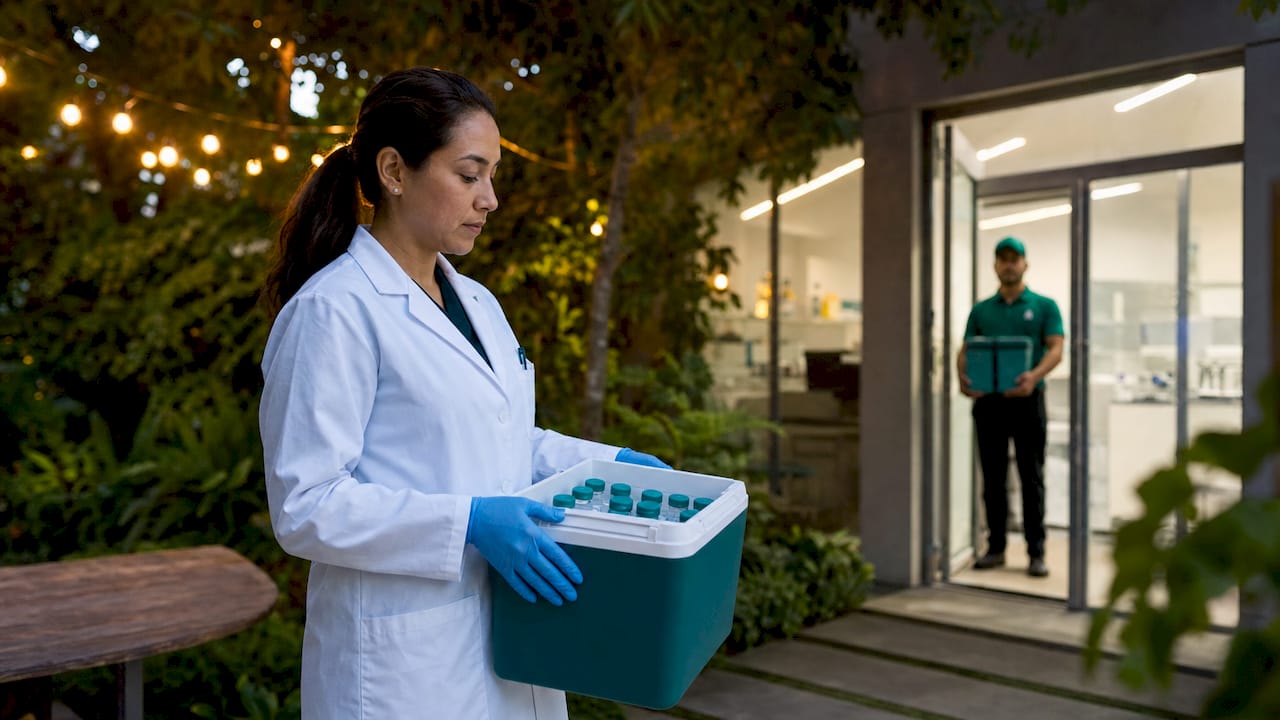
After-Hours Specimen Courier Logistics: A Lab Manager's Guide
***
> TL;DR: > > - After-hours specimen courier logistics involves the safe transport of medical samples outside regular hours to preserve their integrity and ensure compliance. Proper packaging, real-time monitoring, and strong courier relationships are essential to prevent specimen rejection and delays. Investing in training and technology helps labs adapt to evolving regulations and improve patient outcomes regardless of the time.
***
After-hours specimen courier logistics is the process of safely transporting medical samples outside standard business hours to preserve specimen integrity and support accurate diagnostics. Lab managers and healthcare providers who rely on overnight specimen delivery know that a missed pickup or a temperature excursion at 11 p.m. carries the same clinical consequences as one at noon. The WHO 2025–2026 guidance and UN3373 regulations now set a clear compliance baseline for every courier handling infectious specimens, regardless of the hour. Getting this right requires more than a reliable driver. It demands verified packaging, documented handoffs, and a courier partner who treats after-hours lab logistics as a core service, not an afterthought.
What are the essential regulatory and packaging requirements for after-hours specimen courier logistics?
Regulatory compliance is the foundation of every safe specimen transport run, and the rules apply equally at 2 a.m. as they do at 2 p.m. The WHO guidance effective october 2025 defines roles, classification procedures, triple packaging requirements, marking, labeling, documentation, and incident response protocols for infectious substance transport. Labs and couriers that skip any of these steps risk shipment rejection, regulatory penalties, and compromised patient results.
UN3373 Category B is the classification that covers most diagnostic specimens shipped between clinical sites. Under IATA PI 650 standards, air transport of Category B specimens requires a triple packaging system with three distinct layers.
- Primary container: A leakproof receptacle holding the specimen directly, sealed to prevent any release.
- Secondary container: A second leakproof layer surrounding the primary, with sufficient absorbent material to contain the full volume of liquid if the primary fails.
- Outer packaging: A rigid outer box or container that protects the secondary during transport and carries all required markings and labels.
- Labeling and documentation: The outer packaging must display the UN3373 diamond mark, the proper shipping name "Biological Substance, Category B," and shipper and receiver details.
- Emergency contact: IATA regulations require an emergency contact name and phone number on the package or Air Waybill for every Category B shipment.
Training is not optional under this framework. The WHO guidance requires that anyone involved in classifying, packaging, or transporting infectious specimens complete documented training and participate in risk management procedures. For after-hours courier solutions, this means your courier staff must hold current certifications, not just your daytime lab technicians.
Pro Tip: Review your courier partner's training records before signing any after-hours service agreement. A courier who cannot produce current dangerous goods certification is a compliance liability, regardless of their pickup window.
How do you prepare and package specimens properly for after-hours courier pickup?
Proper preparation before pickup is the single most controllable variable in after-hours specimen transport. Once the courier leaves your facility, you cannot correct a packaging error without risking the entire sample. The sender bears full legal and clinical responsibility for packaging compliance under both WHO and IATA frameworks.
Follow this preparation sequence before every after-hours pickup:
- Classify the specimen. Confirm whether the sample meets Category B criteria under UN3373 or requires a higher classification. Misclassification is one of the most common causes of shipment rejection.
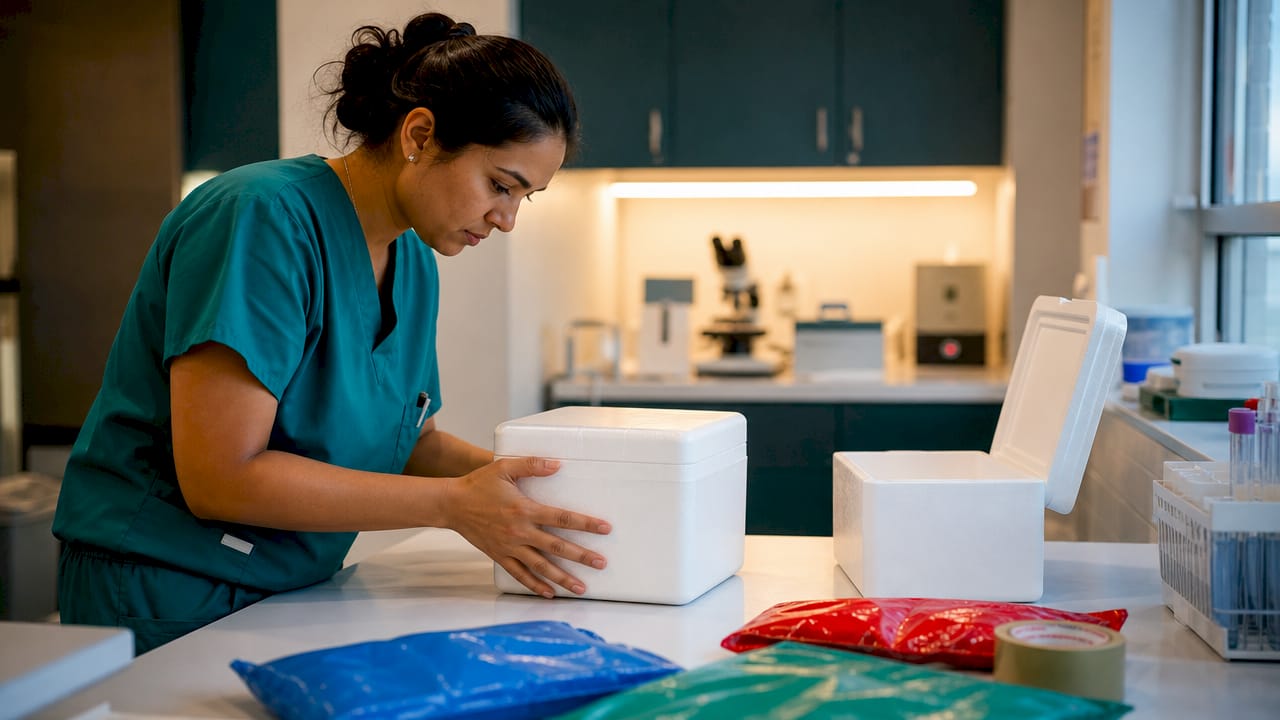
- Pre-condition insulated packaging. For cold-chain specimens requiring 2–8°C, pre-condition your insulated containers before loading. Placing a warm specimen into an unconditioned cooler defeats the purpose of the packaging entirely.
- Verify triple packaging integrity. Check that the primary container is sealed and leakproof, the secondary container holds adequate absorbent material, and the outer packaging is rigid and undamaged.
- Confirm labeling and documentation. Attach the UN3373 diamond mark, proper shipping name, shipper and receiver addresses, and all required paperwork. Missing a single label element can trigger rejection at a sorting facility.
- Include emergency contact information. Write the responsible party's name and direct phone number on the outer packaging or attach it to the Air Waybill. This is a regulatory requirement, not a courtesy.
- Conduct a final stability check. Confirm the specimen was collected and processed within the analyte's stability window. Shipping a degraded specimen wastes resources and delays patient care.
Packaging verification works best as a bidirectional control. The sender verifies before handoff, and the courier confirms at pickup. This two-step check catches errors that a single review misses, particularly during high-pressure after-hours runs when staffing is reduced.
Pro Tip: Create a laminated pre-pickup checklist posted at your specimen processing station. A physical checklist reduces cognitive load during late-night or weekend pickups when experienced staff may not be available.
What are best practices for managing after-hours specimen collection, transport, and delivery?
Operational discipline separates a reliable after-hours courier program from one that generates recollections and complaints. Pre-analytical variables including transport conditions are a major source of lab errors, which means logistics quality directly affects diagnostic accuracy. Treating transport as a quality management function, not just a delivery task, is the operational shift that produces consistent results.
- Schedule pickups around analyte stability windows. Different analytes degrade at different rates. Adjusting pickup times to match those windows can improve same-day blood draw completion and test frequency. Scheduling is not an administrative detail. It is a clinical decision.
- Use temperature-controlled vehicles and validated packaging. Ambient temperature in a standard vehicle can vary widely between seasons, particularly in Houston where summer heat is extreme. Temperature-controlled transport is the only reliable method for maintaining cold-chain integrity during overnight specimen delivery.
- Deploy GPS and real-time temperature monitoring. GPS tracking and temperature logging provide documented evidence of chain-of-custody conditions throughout the run. This data protects your lab in the event of a disputed result or a regulatory audit.
- Require documented proof of delivery. Photo confirmation and signature capture at the receiving facility create an unambiguous record of handoff time and condition. These records are your defense against claims of delayed or damaged delivery.
- Establish direct communication channels between labs and couriers. After-hours runs happen when administrative staff are unavailable. Couriers need a direct line to a lab contact who can authorize decisions, not a voicemail box.
Real-time monitoring technology has moved from optional to expected in professional specimen transportation services. Labs that still rely on passive temperature indicators and verbal handoff confirmations are operating below the current standard of care for logistics.
What are common challenges in after-hours specimen courier logistics and how to troubleshoot them?
After-hours lab logistics introduces a specific set of risks that daytime operations rarely face. Reduced staffing, limited vendor support, and longer transit times all compound the consequences of errors that would be minor during business hours.
- Temperature excursions during transport. Delayed or improper specimen transport causes hemolysis or bacterial overgrowth, and rejection rates in affected facilities can increase by 10–20%. The solution is validated packaging combined with active temperature monitoring, not passive ice packs.
- Packaging errors discovered at pickup. When a courier arrives and finds a packaging defect, the options are limited. Either the sender corrects it on the spot, delaying the run, or the specimen ships in a compromised state. Pre-pickup verification eliminates this scenario.
- Coordination gaps on weekends and holidays. After-hours courier solutions must account for reduced lab staffing and limited courier dispatch availability. Build an escalation contact list that includes at least two reachable staff members per facility for every after-hours window.
- Courier staff unfamiliar with specimen-specific requirements. Not every medical courier is trained on the specific handling requirements for blood cultures, frozen tissue, or viral transport media. Require specimen-type-specific training documentation from your courier partner.
- Unexpected route or vehicle issues. Equipment failures and traffic incidents happen. Contingency planning means having a backup courier on call and a protocol for transferring specimens safely if the primary vehicle is compromised.
Training is the most cost-effective preventive measure available. Couriers who understand why a 4°C deviation matters are more likely to act correctly when a cooler seal fails at midnight than those who only know the procedural steps.
Key takeaways
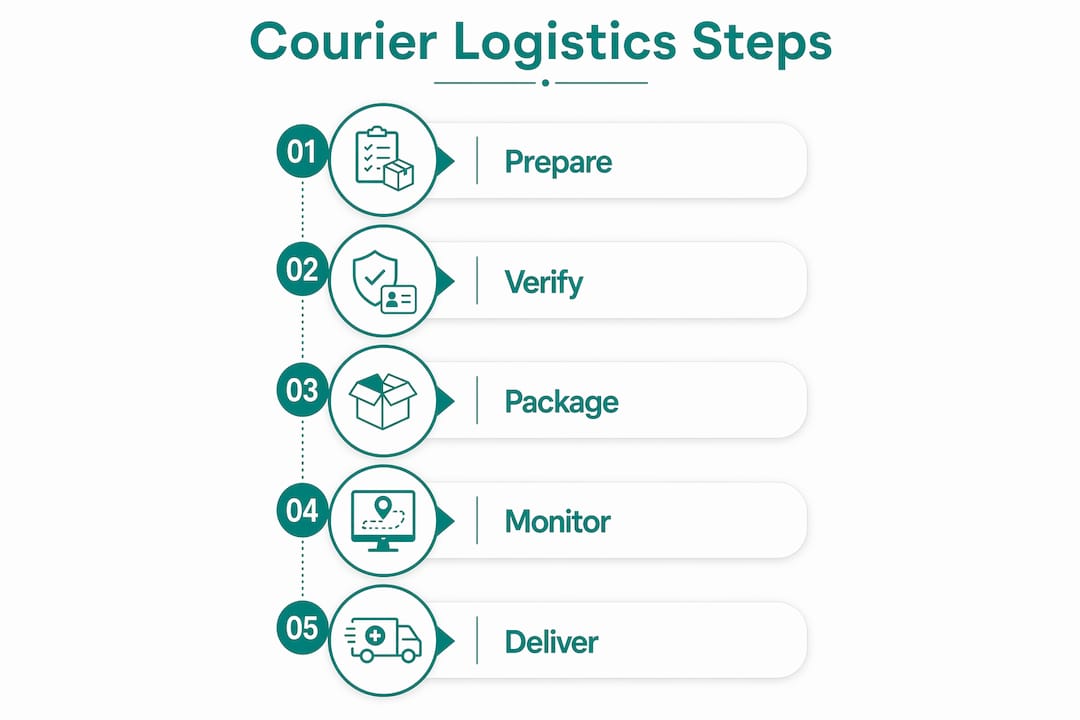
After-hours specimen courier logistics requires verified packaging, real-time monitoring, and regulatory compliance to protect specimen integrity and patient outcomes at every hour of the day.
| Point | Details |
|---|---|
| Regulatory compliance is non-negotiable | WHO 2025–2026 and UN3373 standards apply to every shipment, regardless of pickup time. |
| Pre-conditioning prevents cold-chain failure | Insulated packaging must be pre-conditioned to 2–8°C before loading cold-chain specimens. |
| Scheduling affects clinical outcomes | Adjusting pickup timing by even one hour can increase same-day test completion rates measurably. |
| Real-time monitoring is now standard | GPS and temperature logging provide chain-of-custody documentation that protects labs during audits. |
| Bidirectional packaging verification reduces errors | Both sender and courier must confirm packaging compliance at handoff to catch defects before transport. |
What I have learned from years of watching after-hours logistics fail
After spending years working alongside lab managers and courier operations teams, I have come to one firm conclusion: most after-hours specimen failures are not courier failures. They are handoff failures. The specimen leaves the lab in a compromised state, and the courier simply delivers the problem to its destination faster.
The industry conversation focuses heavily on vehicle temperature control and GPS tracking, and those tools matter. But the more I observe real-world operations, the more I believe that packaging verification before pickup is where the most preventable errors occur. Labs under staffing pressure at 10 p.m. skip steps they would never skip at 10 a.m. That gap is where specimens are lost.
The other underappreciated factor is the relationship between the lab and the courier. Facilities that treat their courier as a vendor manage exceptions poorly. Facilities that treat their courier as a clinical partner share information, build protocols together, and resolve problems before they become patient care events. The same-day lab transport benefits that administrators cite in meetings are only achievable when that relationship is functional at the operational level, not just on paper.
Evolving WHO regulations and tighter IATA requirements will continue raising the compliance bar. Labs that invest now in training, monitoring technology, and courier partnerships will absorb those changes without disruption. Labs that treat after-hours transport as a low-priority logistics task will face recollections, audit findings, and patient care delays that are entirely avoidable.
> — Copergrine Editorial Team
***
Copergrine's after-hours medical courier service for labs and providers
Copergrine operates a dedicated medical courier service across the Greater Houston area, built specifically for healthcare providers and labs that cannot afford gaps in specimen transport coverage.
Copergrine's courier division handles urgent lab specimen shipping with real-time GPS tracking, temperature-controlled transport, and photo and signature proof of delivery at every handoff. The service is designed around WHO and UN3373 compliance requirements, so your specimens move within a documented chain of custody regardless of the hour. For lab managers who need a courier partner that understands specimen-type requirements and operates with the same standards at midnight as at noon, Copergrine's Houston courier solutions are built for exactly that need. Contact Copergrine to discuss a customized after-hours transport agreement for your facility.
***
FAQ
What is after-hours specimen courier logistics?
After-hours specimen courier logistics is the organized process of transporting medical samples outside standard business hours while maintaining specimen integrity, regulatory compliance, and chain-of-custody documentation.
What packaging standard applies to most diagnostic specimens?
Most diagnostic specimens ship under UN3373 Category B classification, which requires triple packaging compliant with IATA PI 650, including leakproof primary and secondary containers with absorbent material and a rigid outer package.
How do I maintain cold-chain integrity during overnight specimen delivery?
Pre-condition insulated packaging to the required temperature range before loading specimens, use validated temperature-controlled transport, and deploy real-time temperature monitoring to document conditions throughout the run.
What are the most common causes of after-hours specimen rejection?
Improper packaging and temperature excursions are the leading causes, with delayed transport in remote or off-hours settings increasing rejection rates by 10–20% in affected facilities.
How does pickup timing affect specimen quality?
Scheduling courier pickups to align with analyte stability windows directly affects test accuracy and can improve same-day blood draw completion rates.
Recommended
- Benefits of Same-Day Lab Transport for Healthcare Teams | Copergrine
- Temperature chain of custody for clinical specimens: a primer for lab managers | Copergrine
- How to Package Biohazard Specimens for Transport | Copergrine
- 5 signs your lab needs a dedicated medical courier partner in Houston | Copergrine