
Why Specimen Integrity Matters in Medical Logistics
Discover why specimen integrity matters in logistics. Learn how maintaining sample stability ensures reliable lab results and patient safety.

Why Specimen Integrity Matters in Medical Logistics
***
> TL;DR: > > - Specimen integrity is essential for reliable lab results and safe clinical decisions. Proper transport controls, documentation, and staff collaboration prevent preanalytical errors and preserve sample quality. Implementing temperature regulation, tracking, and verification measures helps reduce specimen rejection and ensures accurate diagnostics.
***
Specimen integrity is defined as the maintenance of a biological sample's biochemical stability and correct identification from the moment of collection through final test reporting. When that integrity fails, lab results become unreliable, and clinical decisions built on those results put patients at risk. CDC mandates quality system controls governing specimen handling across the entire workflow, treating end-to-end integrity as a non-negotiable quality system requirement. Understanding why specimen integrity matters in logistics is not an academic exercise. It is a direct operational responsibility shared by every courier, phlebotomist, and lab manager in the supply chain.
Why specimen integrity matters in logistics: the preanalytical problem
The preanalytical phase is where most laboratory errors originate. Preanalytical errors account for 60–70% of all laboratory errors, with transport, labeling, and handling failures as the leading causes. That figure means the majority of diagnostic inaccuracies never touch the analyzer. They happen before the sample reaches the lab bench.
Common failure modes in this phase include:
- Hemolysis: Red blood cell rupture caused by agitation, temperature extremes, or improper venipuncture technique
- Labeling errors: Mismatched patient identifiers between the tube and the requisition form
- Insufficient volume: Underfilled tubes that alter anticoagulant-to-blood ratios and skew coagulation results
- Delayed transport: Extended transit times that allow analyte degradation, particularly for glucose and enzymes
- Light exposure: UV degradation of bilirubin and other photosensitive analytes
Transport conditions amplify every one of these risks. Temperature excursions during transport can cause hemolysis that falsely elevates potassium by 20–30% and degrades enzymes critical to accurate metabolic panels. A potassium result inflated by 20–30% can trigger unnecessary cardiac interventions. That is the direct patient safety consequence of a logistics failure.
Pro Tip: When planning courier routes, treat temperature excursion risk the same way you treat traffic delays. Build buffer time and backup packaging into every run, not just the ones flagged as high priority.
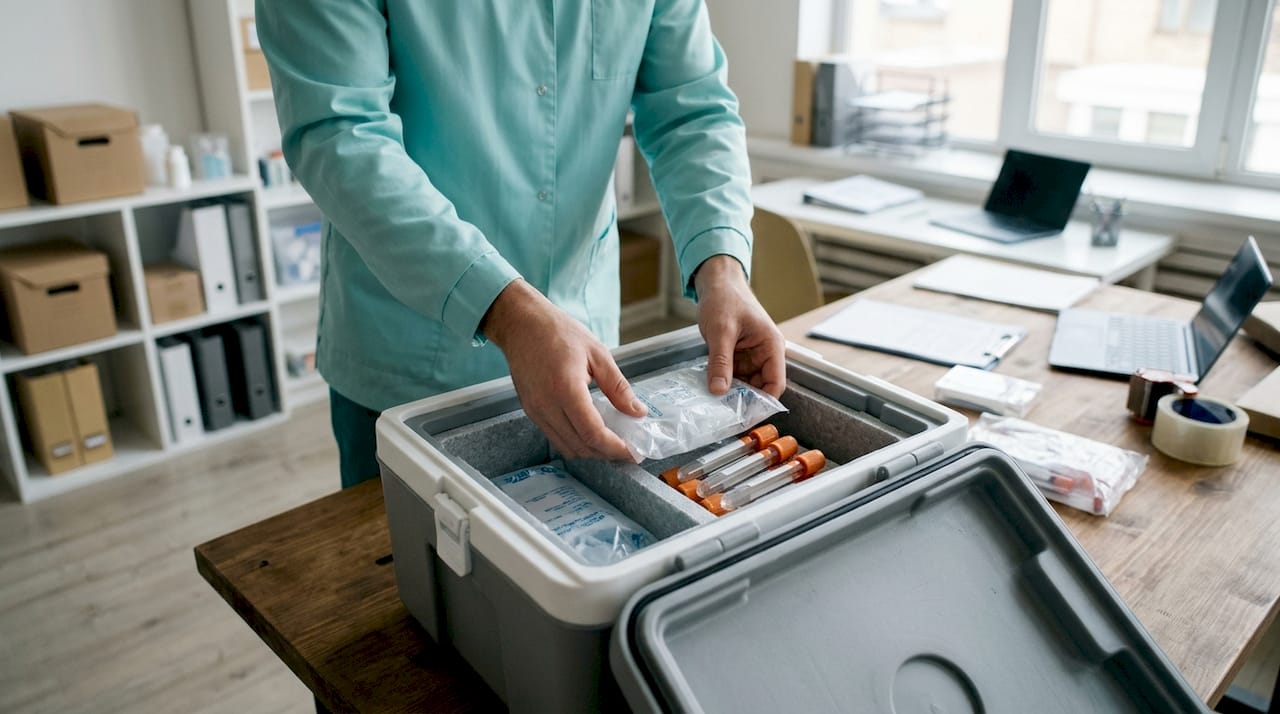
What logistics practices protect specimen quality during transport?
Protecting specimen quality during transport requires a layered approach. No single control is sufficient on its own. Effective specimen handling requires documentation completeness, packaging, timely transport, temperature control, and communication across all stakeholders simultaneously.
The core operational controls are:
- Temperature-controlled containers: Use validated insulated packaging with data loggers that record temperature continuously. Passive systems work for short runs; active refrigeration is required for extended or high-risk transport.
- Biohazard labeling and packaging compliance: Follow IATA P650 and DOT 49 CFR Part 173 standards for infectious substance packaging. Proper triple packaging prevents leakage and contamination.
- Requisition form completeness: Verify that every specimen leaves the collection site with a fully completed requisition form. A hematology lab study found only 19.45% of requisition forms complete, with 5.4% of specimens rejected for insufficient volume or missing labels. That rejection rate represents real patients waiting for results.
- Real-time tracking systems: Deploy GPS-enabled tracking with automated delay alerts. Real-time tracking and temperature monitoring can produce a measurable reduction in specimen rejection rates, directly improving diagnostic reliability.
- Chain of custody documentation: Record every handoff point with timestamps, courier identification, and condition notes. CAP and CLIA require chain of custody as a quality system obligation, and both labs and couriers share that responsibility.
Pro Tip: Conduct a pre-shipment check at the collection site before the courier departs. Confirm tube labels match the requisition, packaging is sealed, and temperature indicators show acceptable range. Catching errors at pickup costs seconds. Catching them at the lab costs a recollection.
How do specimen requirements differ across specimen types?
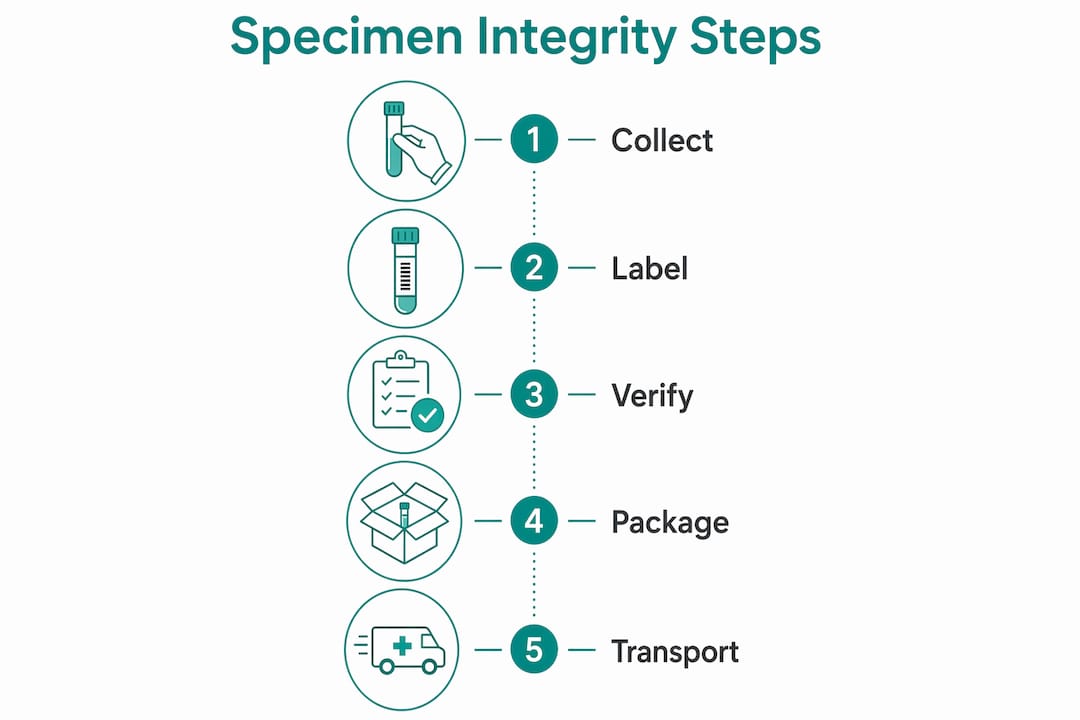
Not all specimens travel the same way. Blood, tissue, and microbiology samples each carry different stability windows, temperature requirements, and contamination risks. Logistics teams that apply a one-size approach to specimen transport will eventually compromise a result.
| Specimen type | Primary transport risk | Recommended control |
|---|---|---|
| Whole blood (chemistry) | Hemolysis from agitation or heat | Room temperature, padded transport, 2-hour window |
| Coagulation samples | Clotting from cold or delay | Room temperature, transport within 4 hours |
| Microbiology cultures | Temperature extremes killing organisms | 35–37°C incubation or room temperature, no refrigeration |
| Frozen tissue / biobank | Thaw from inadequate cooling | Dry ice or liquid nitrogen, validated containers |
| Urine | Bacterial overgrowth from delay | Refrigerated transport, 2-hour collection-to-lab window |
| Bilirubin / photosensitive | UV degradation from light exposure | Amber tubes, light-protected packaging |
Transport time and distance compound these risks significantly. In decentralized care settings, where specimens travel from rural clinics or home health visits to centralized reference labs, the stability window for glucose can close before the sample arrives. Glucose degrades at roughly 10 mg/dL per hour at room temperature in an unseparated tube. A two-hour delay in a warm courier vehicle can shift a borderline result from normal to diabetic range. For cryogenic or biobank specimens, standard coolers are simply not adequate. Liquid nitrogen dry shippers are the only validated option for maintaining viability in those cases.
Transport condition validations should be reproducible for audit, meaning logistics teams must document worst-case scenarios including door openings, delays, and ambient temperature spikes to demonstrate compliance during inspections.
How do healthcare and lab teams collaborate to reduce specimen errors?
Specimen integrity in the supply chain is not a courier problem alone. Pre-analytical specimen issues often originate from incomplete paperwork and inadequate sampling rather than physical handling failures during transport. That finding shifts responsibility upstream to the collection team and the clinical workflow that supports them.
Effective collaboration between clinical and logistics teams requires several coordinated practices. Staff training and competency assessments for both phlebotomy teams and courier personnel must cover specimen-specific handling requirements, not just general safety protocols. A courier who does not know that microbiology cultures should never be refrigerated can invalidate an entire batch of samples.
Barcode scanning and Laboratory Information System integration address the identification gap directly. Standardized protocols and barcoding reduce specimen identification errors and improve laboratory safety by eliminating manual transcription at every handoff point. When a barcode scan at pickup matches the LIS record, the chain of custody is electronic, auditable, and far less vulnerable to human error.
Pre-shipment verification checklists formalize the quality gate at the collection site. These checklists confirm tube type, volume adequacy, label accuracy, and requisition completeness before the courier departs. Protocols for specimen rejection and recollection must also be clearly defined. When a sample arrives compromised, the lab needs a documented process for notifying the ordering provider, logging the rejection reason, and initiating recollection without delay.
Pro Tip: Build a shared rejection log between your lab and courier partner. Tracking rejection reasons by courier route, collection site, and specimen type reveals systemic problems that individual incident reports miss entirely.
Key Takeaways
Specimen integrity failures are primarily a logistics and preanalytical problem, not a laboratory analyzer problem, and preventing them requires coordinated controls across collection, transport, and documentation.
| Point | Details |
|---|---|
| Preanalytical errors dominate | 60–70% of lab errors occur before testing, mostly during transport and collection. |
| Temperature control is non-negotiable | Excursions can falsely shift potassium results by 20–30%, directly affecting clinical decisions. |
| Documentation completeness matters | Fewer than 1 in 5 requisition forms are fully complete; pre-shipment checks close that gap. |
| Specimen type drives transport protocol | Blood, microbiology, and frozen tissue each require distinct temperature ranges and time windows. |
| Technology reduces rejection rates | Real-time tracking and temperature monitoring can measurably reduce specimen rejection rates. |
What I've learned about where specimen logistics actually breaks down
By Copergrine Editorial Team
After years of observing specimen transport workflows across clinical and logistics settings, the pattern that stands out most is not the dramatic failure. It is the quiet, routine one. Labs and courier teams invest heavily in packaging and cold chain technology, then lose specimens to a missing patient date of birth on a requisition form. The paperwork problem is unglamorous, but it is measurable and fixable.
The second lesson is that logistics planning almost never accounts for worst-case scenarios until after an audit or a patient complaint forces the issue. Building worst-case transport simulations into your standard operating procedures, before regulators ask for them, is the single most underused quality improvement tool available to logistics managers today.
Real-time temperature sensors and GPS tracking are genuinely useful. But technology does not replace the pre-shipment verification step. The most reliable specimen transport programs I have seen combine both: technology for monitoring in transit and human verification before departure. Neither alone is sufficient.
My strongest recommendation is to standardize chain of custody metrics across your institution and share them with your courier partner quarterly. When both sides see the same rejection data, the conversation shifts from blame to process improvement. That shift is where real quality gains happen.
> — Copergrine Editorial Team
***
Copergrine's medical courier services for specimen transport
Copergrine operates a medical courier service in Houston built specifically for the demands of clinical specimen transport. Every run includes temperature chain of custody management, real-time tracking, and compliance-ready documentation aligned with CAP and CLIA quality system requirements.

For healthcare teams managing same-day lab transport across the Greater Houston area, Copergrine provides the logistics infrastructure to keep specimens within stability windows and documentation complete at every handoff. The integrated EMR platform at Copergrine's telehealth and health systems connects specimen ordering directly to courier dispatch, reducing the paperwork gaps that drive rejection rates. Contact Copergrine to assess your current specimen transport workflow and identify where integrity risks are highest.
***
FAQ
What is specimen integrity in laboratory testing?
Specimen integrity is the preservation of a biological sample's biochemical stability and correct identification from collection through final test reporting. CDC quality system standards require written policies governing this process at every stage of the workflow.
What causes specimen integrity failure during transport?
The most common causes are temperature excursions, agitation-induced hemolysis, labeling errors, delayed transport, and incomplete requisition forms. Preanalytical errors account for 60–70% of all laboratory errors, with transport conditions as a primary contributor.
How does temperature affect specimen quality in transit?
Temperature excursions during transport can cause hemolysis that falsely elevates potassium by 20–30% and degrades enzymes used in metabolic testing. Each specimen type has a defined stability window and temperature range that logistics protocols must respect.
What is chain of custody in specimen logistics?
Chain of custody is a documented record of every handoff point, condition check, and personnel contact from collection to lab receipt. CAP and CLIA require chain of custody as a formal quality system obligation shared by both the laboratory and the courier.
How can logistics teams reduce specimen rejection rates?
Real-time tracking systems and temperature monitoring can measurably reduce specimen rejection rates. Combining technology with pre-shipment verification checklists and standardized rejection logging produces the most consistent quality outcomes.
Recommended
- Benefits of Same-Day Lab Transport for Healthcare Teams | Copergrine
- Temperature chain of custody for clinical specimens: a primer for lab managers | Copergrine
- How to Package Biohazard Specimens for Transport | Copergrine
- Cryogenic LN2 specimen transport: when your samples need more than a cooler | Copergrine